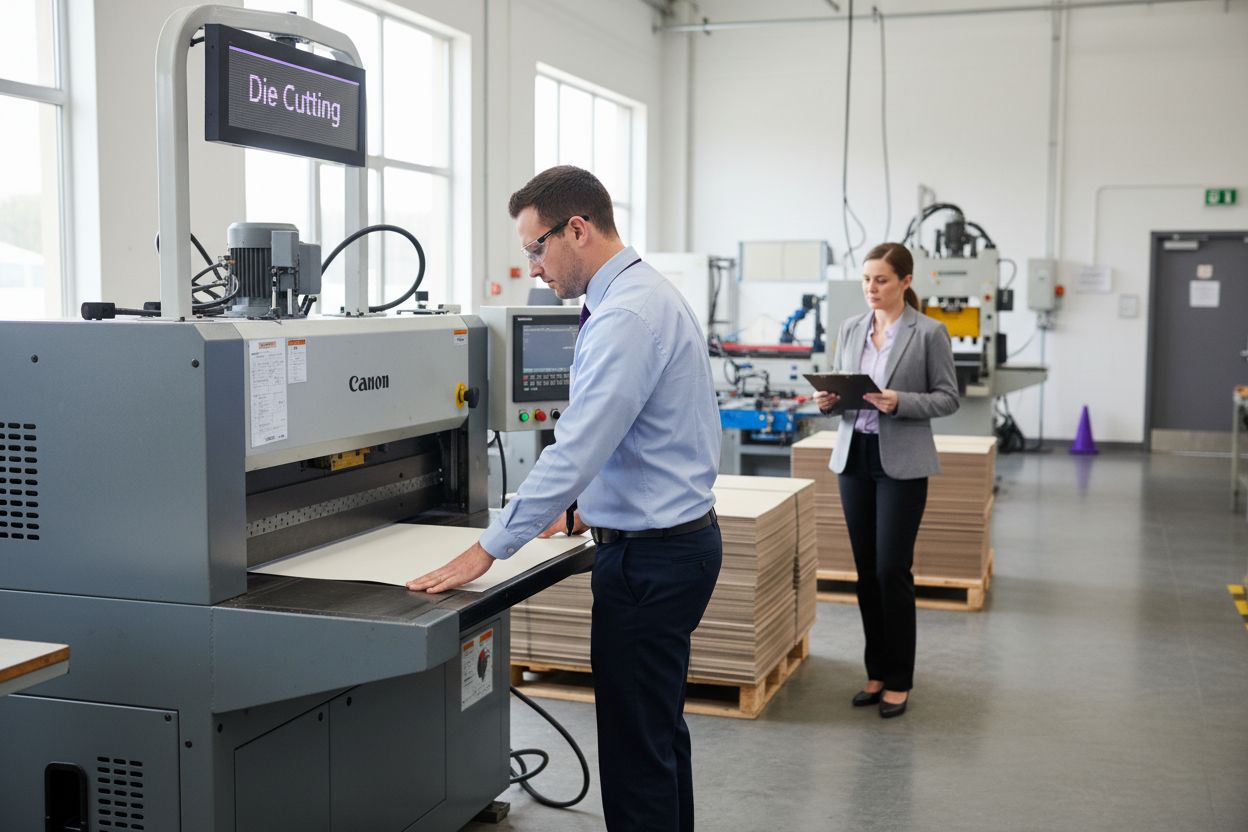
Die cutting might sound like a simple factory term but its impact is massive across many industries. You might picture flat sheets being stamped into shapes and that is part of it. The bigger surprise is just how efficient this process has become. Modern die cutting can reduce material waste by up to 70 percent compared to older cutting methods. That type of precision changes how products are designed and built. It is not just about making cuts, it is about bringing complex ideas to life with speed and almost zero waste.
To help clarify the core differences between traditional and modern die cutting approaches, the following table compares key aspects based on information in the article.
| Approach | Material Waste | Production Speed | Design Complexity | Typical Applications |
|---|---|---|---|---|
| Traditional Die Cutting | High (more waste) | Slower, manual steps | Limited | Basic packaging, simple shapes |
| Modern Die Cutting | Low (up to 70% less) | Faster, automated | High (intricate designs) | Complex components, diverse sectors |
Table of Contents
- Defining Die Cutting: What It Is And How It Works
- The Significance Of Die Cutting In Various Industries
- Understanding Die Cutting Techniques And Tools
- Real-World Applications Of Die Cutting: Industries And Innovations
- Exploring Cost-Effectiveness And Efficiency In Die Cutting
Quick Summary
| Takeaway | Explanation |
|---|---|
| Die cutting is efficient and precise. | This manufacturing technique enables the creation of custom shapes with minimal waste and high accuracy through strategic pressure and advanced tools. |
| Applicable across various industries. | Die cutting is used in packaging, automotive, medical, and electronics sectors to produce complex components that meet specific design needs. |
| Advanced technologies enhance capabilities. | Modern die cutting integrates sophisticated design software and equipment, allowing for the processing of diverse materials and intricate designs. |
| Cost-effective for high-volume production. | Die cutting minimizes material waste and reduces labor costs, making it an economical choice for large-scale manufacturing. |
| Precision tools are essential. | Selecting the right cutting tools and techniques is critical for achieving optimal results in various materials and applications. |
Defining Die Cutting: What It Is and How It Works
Die cutting is a specialized manufacturing technique that transforms flat materials into precise, custom shapes through a powerful combination of cutting tools and strategic pressure. At its core, die cutting involves using a specialized machine and a custom-designed die (essentially a sharp, cookie-cutter-like tool) to cut, shape, and manipulate various materials with exceptional accuracy and repeatability.
The Fundamental Mechanics of Die Cutting
The die cutting process operates on a straightforward yet ingenious principle. A die (a sharp, shaped blade) is carefully crafted to match the exact design specifications needed for a particular project. This die is then pressed against the target material using significant hydraulic or mechanical force, effectively cutting through the material in a single, clean motion.
Key components of the die cutting process include:
- Die: A custom-made cutting tool with razor-sharp edges
- Material: Typically flat sheets like paper, cardboard, plastic, or metal
- Pressing Mechanism: Applies controlled pressure to create precise cuts
Applications Across Industries
Die cutting isn’t confined to a single sector but spans multiple industries where precision cutting is crucial. From packaging and signage to automotive manufacturing and read more about custom printing techniques, die cutting provides an efficient solution for creating intricate, consistently shaped components.
Manufacturers and designers appreciate die cutting for its ability to produce complex shapes with minimal waste. Unlike traditional cutting methods that might require multiple passes or manual intervention, die cutting can transform entire material sheets into exact specifications in a single, swift operation. This efficiency makes it an invaluable technique for businesses seeking high-quality, repeatable results across various production scales.
The Significance of Die Cutting in Various Industries
Die cutting transcends traditional manufacturing boundaries, serving as a transformative technique that enables precise material manipulation across diverse sectors. Its versatility and efficiency make it an essential process for businesses seeking innovative solutions to complex design and production challenges.
Industrial Applications and Strategic Advantages
The strategic importance of die cutting extends far beyond simple material cutting. In manufacturing environments, die cutting represents a critical method for producing consistently shaped components with minimal material waste. Precision and repeatability are the hallmarks of this technique, allowing industries to achieve high-quality outputs with remarkable efficiency.
Key industries leveraging die cutting include:
The table below summarizes the major industries that leverage die cutting, along with the primary applications of the process within each industry.
| Industry | Primary Applications |
|---|---|
| Packaging | Custom containers, protective inserts, marketing displays |
| Automotive | Interior/exterior component templates, gaskets, seals |
| Medical | Device parts, protective covers, precision elements |
| Electronics | Circuit boards, insulation, mounting solutions |
| Aerospace | Mechanical components, custom-fit assemblies |
- Packaging: Creating custom product containers and protective casings
- Automotive: Producing intricate interior and exterior component templates
- Medical: Manufacturing precise medical device components and protective covers
- Electronics: Crafting specialized circuit board and component mounting solutions
Technological Innovations and Material Versatility
Modern die cutting technologies have dramatically expanded the range of materials that can be processed. From delicate papers and fabrics to robust metals and composites, die cutting machines now accommodate an extensive spectrum of material types. Learn more about advanced cutting techniques that complement traditional die cutting approaches.
The adaptability of die cutting enables manufacturers to push design boundaries, creating intricate shapes and patterns that were previously impossible or prohibitively expensive to produce. By combining computer-aided design with sophisticated hydraulic pressing mechanisms, businesses can transform complex digital concepts into tangible, precisely cut physical components with unprecedented speed and accuracy.
Understanding Die Cutting Techniques and Tools
Die cutting represents a sophisticated manufacturing process that combines precision engineering with advanced material manipulation techniques. The success of die cutting depends critically on selecting the right tools, understanding specialized techniques, and implementing strategic approaches that ensure optimal results across different materials and design requirements.
Core Components and Specialized Equipment
At the heart of die cutting lie several essential components that enable precise material transformation. Die cutting machines are sophisticated pieces of equipment designed to apply controlled pressure and movement, transforming raw materials into exact specifications. These machines range from manual hand-operated models to complex computer-controlled systems capable of handling intricate design parameters.
Key equipment in die cutting includes:
- Steel Rule Dies: Precision-engineered cutting tools with sharp metal blades
- Cutting Presses: Hydraulic or mechanical machines that apply consistent pressure
- Digital Design Software: Computer systems for creating complex cutting templates
- Material Feeding Mechanisms: Automated systems that guide materials through cutting processes
Advanced Cutting Techniques and Considerations
Modern die cutting goes beyond simple shape cutting, incorporating sophisticated techniques that address complex manufacturing challenges. Techniques like rotary die cutting enable continuous material processing, while flatbed die cutting provides exceptional precision for smaller production runs.
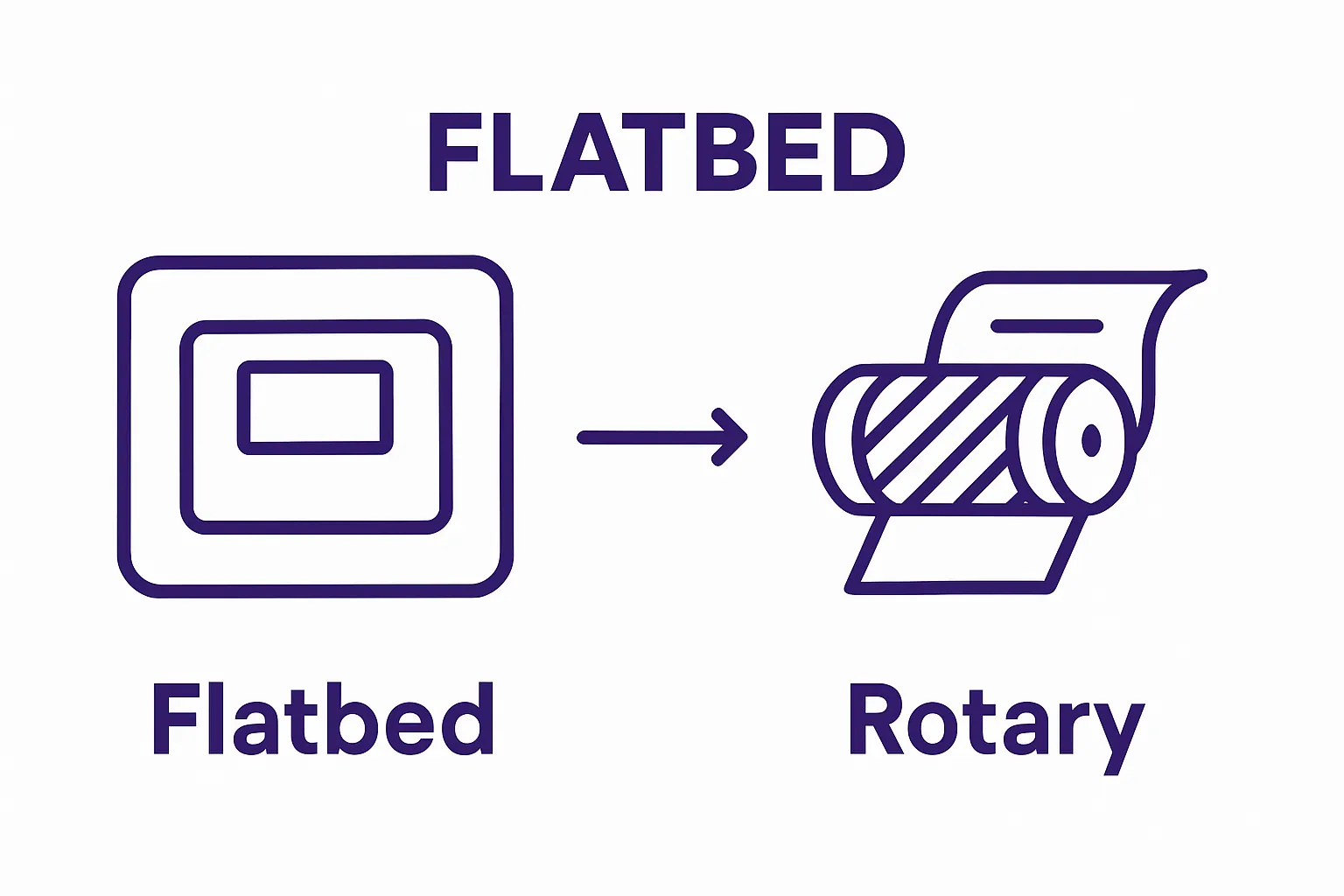 Explore precision cutting methods that complement traditional die cutting approaches.
Manufacturers must carefully consider factors such as material thickness, blade sharpness, pressure settings, and machine calibration to achieve optimal cutting results. The interplay between these variables determines the quality, consistency, and efficiency of the die cutting process, making technical expertise and meticulous attention to detail paramount in successful material transformation.
Real-World Applications of Die Cutting: Industries and Innovations
Die cutting has emerged as a transformative technology that bridges imaginative design with precise manufacturing across multiple industries. Its versatility and precision enable businesses to create complex, customized components that would be challenging or impossible to produce through traditional manufacturing methods.
Packaging and Product Design Innovations
In the packaging sector, die cutting represents a revolutionary approach to creating unique, functional containers and promotional materials. Packaging designers leverage die cutting to develop intricate boxes, inserts, and promotional displays that not only protect products but also enhance brand visual identity. These custom-designed packaging solutions provide companies with a competitive edge by creating memorable unboxing experiences.

Key packaging applications include:
- Custom Product Containers: Unique shapes for consumer goods
- Protective Packaging: Precise inserts and cushioning elements
- Marketing Materials: Complex promotional displays and brochures
- Retail Packaging: Innovative product presentation solutions
Industrial and Technical Manufacturing Applications
Beyond packaging, die cutting plays a critical role in technical and industrial manufacturing processes. Automotive, aerospace, and electronics industries rely on die cutting to produce precision components with exceptional consistency. Explore advanced manufacturing cutting techniques that demonstrate the technology’s remarkable capabilities.
The technology’s ability to work with diverse materials like rubber, plastics, metals, and composites makes it indispensable for creating gaskets, seals, electrical insulation, and complex mechanical components. Manufacturers appreciate die cutting’s capacity to produce high-volume, identical parts with minimal waste, driving efficiency and reducing production costs across various technical domains.
Exploring Cost-Effectiveness and Efficiency in Die Cutting
Die cutting represents a strategic manufacturing approach that delivers exceptional economic advantages through precision, scalability, and resource optimization. By transforming complex design requirements into efficient production processes, businesses can significantly reduce manufacturing costs while maintaining superior product quality and consistency.
Economic Advantages of Precision Manufacturing
The economic landscape of die cutting is defined by its remarkable ability to minimize material waste and maximize production efficiency. Economies of scale become particularly pronounced when companies leverage die cutting for high-volume manufacturing, where initial tooling investments are quickly offset by substantial per-unit cost reductions. Modern die cutting technologies enable manufacturers to achieve unprecedented levels of material utilization, often reducing waste by up to 70% compared to traditional cutting methods.
Key economic benefits include:
- Reduced Material Waste: Precise cutting minimizes excess material consumption
- Faster Production Cycles: Rapid, consistent component manufacturing
- Lower Labor Costs: Automated processes reducing manual intervention
- Scalable Manufacturing: Easy adaptation to varying production volumes
Technological Efficiency and Cost Optimization
Advanced die cutting technologies have revolutionized manufacturing economics by integrating sophisticated design software, precision machinery, and intelligent material handling systems. Learn more about advanced cutting optimization techniques that demonstrate the technology’s economic potential.
Manufacturers can achieve significant cost savings by strategically selecting die cutting approaches that align with specific project requirements. Factors such as material type, complexity of design, production volume, and desired precision all play crucial roles in determining the most cost-effective manufacturing strategy. By carefully analyzing these variables, businesses can develop die cutting processes that deliver exceptional value, transforming production challenges into competitive advantages.
Transform Complex Die Cutting Needs Into Custom Print Solutions
Understanding die cutting is important, especially if you want your business materials to stand out with precision and consistency. Many companies struggle to create detailed, high-quality packaging or signage because ordinary cutting methods waste materials and fail to deliver exact results. As highlighted in the article, die cutting overcomes these issues by allowing you to achieve intricate designs, perfect edges, and repeatable quality across every project.
At Titans of Print, we turn your imaginative concepts into perfectly manufactured products using advanced die cutting and other precision techniques. Whether you need unique signs, eye-catching promotional displays, or custom product packaging, our team manages the details, from design to installation. Do not settle for off-the-shelf prints when your brand deserves something tailored and efficient. Let us help you benefit from expert craftsmanship and fast turnarounds. Ready to upgrade your next print or signage project? Visit Titans of Print to see how our solutions can bring your ideas to life. You can also discover our wide range of services and get inspired by professional custom printing options. Connect with us today to experience the difference.
Frequently Asked Questions
What is die cutting and how does it work?
Die cutting is a manufacturing technique that uses a custom-designed die and a machine to cut flat materials into precise shapes with exceptional accuracy, utilizing significant force to create clean cuts in a single operation.
What materials can be used in die cutting?
Die cutting can be performed on a variety of materials, including paper, cardboard, plastics, metals, and even fabrics, making it versatile for multiple industries such as packaging, automotive, and medical.
What are the benefits of using die cutting in manufacturing?
The benefits of die cutting include precision and repeatability in cutting shapes, reduced material waste, faster production cycles, lower labor costs due to automated processes, and the ability to efficiently produce high-volume, identical components.
How do advanced die cutting techniques differ from traditional methods?
Advanced die cutting techniques, such as rotary die cutting and flatbed die cutting, allow for continuous material processing and exceptional precision, respectively. These methods enhance manufacturing capabilities by accommodating complex designs and improving overall efficiency.
Recommended
- What Is The Difference Between Laser Cutting And CNC Routing?
- What Is Laser Cutting, And How Is It Used In Signage?
- Laser Cutting And Engraving Services | Precision 3D Signage
- What Is Print Bleed? Understanding Its Importance In Design
- AI AutoNest in PPF Cutting: How Aeoncut Saves Time & Material – AEONCUT PPF Pre-cut Cutting software