


Screen Printed T-Shirts and Apparel
Custom shirts, uniforms, event apparel, hustle shirts, tank tops and branded merch.
Need a quote?
|
Loading
|
For the most accurate apparel quote, send the shirt style, quantity, size breakdown, artwork, print locations, ink colors, deadline and whether the order is for a business, event, staff uniform, fundraiser, school, walk/run or merch drop.
Quality uniforms, event shirts and branded apparel
Screen printed T-shirts are still one of the most practical ways to produce bold, durable apparel in bulk. They work for company uniforms, warehouse crews, school shirts, nonprofit events, 5K walks, awareness campaigns, restaurant shirts, family reunions, branded sweaters, tank tops, trade show giveaways and local merch. Titans of Print helps customers choose the right garment, ink, print method, artwork setup and timeline so the finished order looks clean and holds up after real use.
What is screen printing?
Screen printing is an apparel printing method where ink is pushed through a prepared mesh screen onto a garment. Each spot color usually needs its own screen, which is why screen printing is strongest when the artwork, quantity, colors and print locations are planned correctly. It is commonly used for bulk T-shirts because it can produce bold color, strong opacity and durable prints on cotton, blends, sweaters, tanks and select performance apparel.
Whether you need warehouse sweaters, staff uniforms, 5K walk shirts, awareness tank tops, restaurant apparel, event giveaways, school shirts or branded merch, we can help with your custom screen printed apparel order.

From artwork review to printing, curing, counting and final packaging.
Screen Printing Process

Screen Printed T-Shirts for Businesses, Events, Teams and Brands
Screen printed T-shirts can look simple from the outside, but the final result depends on a lot of small production decisions. The shirt brand, fabric blend, garment color, ink type, artwork quality, number of colors, print location, order size and deadline all affect the finished apparel. A shirt for a one-day event does not need the same planning as warehouse sweaters that a crew may wear every week. A 5K walk shirt does not need the same setup as a staff uniform. A Doral awareness tank top does not behave the same as a heavy cotton tee, a hoodie sleeve print or a polyester performance shirt.
Titans of Print produces custom screen printed T-shirts and apparel for businesses, schools, events, teams, nonprofits, family reunions, real estate groups, restaurants, gyms, corporate teams, warehouse crews and local brands. We help customers choose between screen printing, DTF, DTG, embroidery and other apparel decoration methods when the job calls for it. Screen printing is often the right choice for bulk orders where durability, strong color and repeat consistency matter.
We have produced local apparel projects such as Boeing warehouse sweaters, Lions International shirts, ThyssenKrupp 5K walk shirts for a Downtown Miami event, and breast cancer awareness tank tops for a Doral event. Those jobs are all apparel printing, but they are not the same kind of order. A sweater sleeve print has different placement issues than a full-back Lions shirt. A performance shirt for a walk or run has different fabric concerns than a cotton tank top for an awareness event. This is why the details matter before the order goes to press.
How Do Screen Printed T-Shirts Benefit Businesses?
Screen printed shirts are useful because they put your logo or message on something people actually wear. For a business, that can mean uniforms, staff identification, event apparel, giveaway shirts, merch, crew shirts or branded apparel for a trade show. A good shirt order should make your team look organized and make your business easier to recognize.
They Make Staff Look Organized
A clean shirt, hoodie or sweater with the company logo can make a warehouse crew, restaurant team, school staff, event team, installer crew or sales group look more put together. This matters when employees are seen by customers, walking into buildings, setting up booths, working events or representing the brand in public. For a warehouse or operations team, the print also has to be practical. Sleeve prints, left chest logos and back prints all read differently depending on how the garment is worn.
They Work Well for Events, Walks and Local Campaigns
Screen printed shirts are common for 5K walks, charity events, school functions, church groups, nonprofit campaigns, family reunions and community events because the same design can be printed across many sizes. For the ThyssenKrupp 5K walk shirts in Downtown Miami, the apparel needed to work as event wear, team identification and a keepsake. For breast cancer awareness tank tops in Doral, the design needed to be clear, bold and appropriate for a cause-driven event.
They Can Be Cost-Effective at Quantity
Screen printing usually becomes more efficient when the quantity increases. The setup work is done upfront through screens and color separations, so larger orders can bring the per-shirt cost down compared with smaller runs. The number of ink colors and print locations still affects pricing, so a simple one-color left chest print will not price the same as a full-front, multi-color design plus back print.
They Can Hold Up Well When Produced Correctly
A properly printed and cured screen print can last through repeated wear and washing. Durability depends on the garment, ink, print method, curing temperature, design style and how the shirts are washed. Miami heat, humidity, outdoor events and frequent washing can be hard on apparel, so the garment and print method should match how the shirts will actually be used.
When Screen Printing Is the Right Choice
Screen printing is usually a strong choice when the order has enough quantity to justify the setup, the design uses spot colors, and the customer wants a clean, durable print. It is especially useful for:
- Business uniforms and staff shirts
- Warehouse sweaters and crew apparel
- Restaurant, bar and hospitality shirts
- Construction, service and field crew shirts
- School, club and team shirts
- Trade show and event shirts
- 5K walk, charity and fundraiser apparel
- Family reunion shirts
- Church, nonprofit and volunteer shirts
- Gym, fitness and wellness apparel
- Promotional giveaways and merch tables
- Retail brand or streetwear-style shirt runs
Screen printing is not always the best method for every order. If you only need a few shirts, if the design is full-color photographic artwork, or if every shirt needs different names or numbers, another method like DTF, DTG or vinyl may make more sense. The goal is not to force every apparel job into screen printing. The goal is to use the method that fits the artwork, quantity, budget and deadline.
Artwork and order details
We review the design, shirt style, sizes, quantity, print locations, ink colors, deadline and whether the order is for staff, events, giveaways or merch.

Screens and setup
Each spot color is separated and burned onto a screen so ink can pass through the artwork areas.

Ink and printing
The selected ink is printed onto the garments using the approved design, placement and color setup.

Curing and finishing
The print is cured with heat, then shirts are checked, counted, folded and prepared for pickup or delivery.

Some apparel brands we work with
The best shirt depends on the use: budget event shirts, soft retail-style tees, performance shirts, long sleeve shirts, hoodies, sweaters, polos, workwear, tote bags, aprons and other apparel all print differently. We can help you choose based on comfort, fabric, color, print method, quantity and budget.
Local Apparel Project Examples
The strongest apparel orders start with understanding where the garment will be worn. A corporate sweater, a nonprofit shirt, a 5K performance shirt and an awareness tank top can all use screen printing, but they need different choices around fabric, placement, color and durability.
Boeing Warehouse Sweaters
For Boeing warehouse sweaters, the job was not just about putting a logo on a garment. A sweater or hoodie has weight, seams, sleeves, cuffs and movement that affect print placement. A sleeve print needs to be lined up carefully so it reads when the person is wearing it, not only when the garment is flat on a table. For warehouse apparel, durability matters because the garment may be worn often, handled roughly and washed repeatedly.
Lions International Shirts
For Lions International shirts, the design used a larger back print with a bold organization mark and message. This type of print has to stay readable from a distance, especially if the shirts are worn at events, meetings, volunteer activities or community functions. Large back prints also need proper curing because the ink coverage area is bigger and has to hold up across the full graphic.
ThyssenKrupp 5K Walk Shirts in Downtown Miami
For the ThyssenKrupp 5K walk shirts in Downtown Miami, the apparel had to work for an active event. Walk and run shirts need to be comfortable, visible and appropriate for heat, sweat and movement. If the garment is a performance-style shirt, the fabric may need different handling than basic cotton. Ink choice, curing and print placement become important because the shirt is not just sitting in a closet; people are wearing it outdoors during an event.
Breast Cancer Awareness Tank Tops in Doral
For breast cancer awareness tank tops in Doral, the print needed to be bold, event-ready and easy to recognize. Tank tops introduce different placement issues because the garment shape has less surface area than a standard T-shirt. The neckline, arm openings and fabric stretch can all affect where the design should sit. On awareness apparel, the message has to be clear without overcrowding the front of the shirt.
What Makes a Great Screen Printed T-Shirt?
A great screen printed T-shirt is not just a shirt with ink on it. It is the right garment, the right print method, the right artwork setup and the right production process for the way the shirt will be used. A shirt for a company uniform needs to be comfortable enough for repeated wear. A merch shirt needs to feel good enough for someone to actually buy it. An event shirt needs to be ready on time and readable in photos.
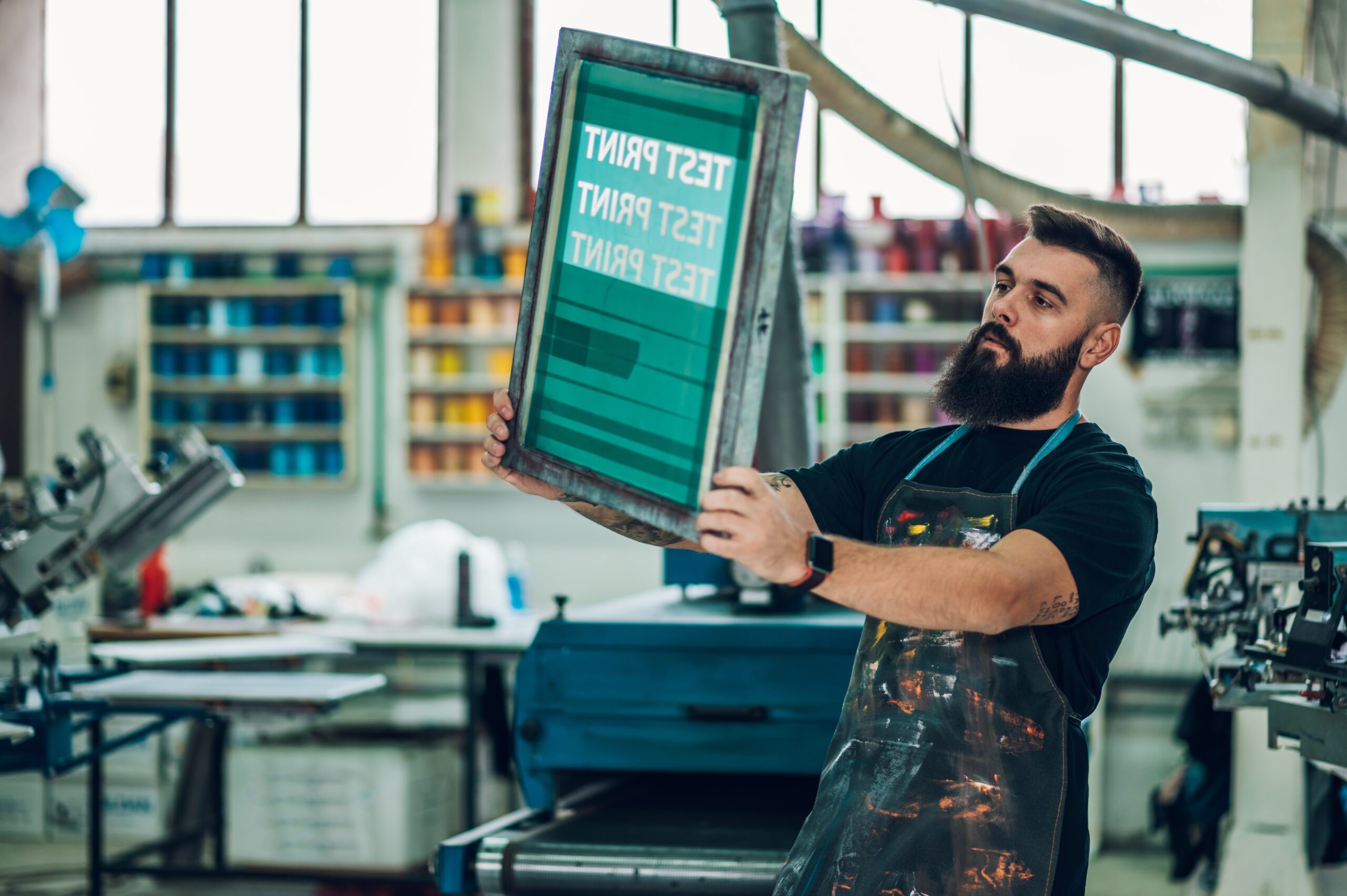
Reviewing a screen before printing apparel.
The Shirt Itself Matters
The blank garment controls the feel, fit and how the print behaves. A basic cotton shirt is practical for many business and event orders. A softer retail-style shirt may be better for merch, boutique brands or customer giveaways. A performance shirt can be better for outdoor crews, gyms, sports teams, 5K walks and hot weather. Cotton, polyester and blends can all be printed, but they may require different inks, underbases or handling.
The Artwork Must Be Print-Ready
Screen printing is most efficient when the artwork is clean and separated correctly. Vector artwork is preferred because it allows the design to stay sharp at print size. Low-resolution files, screenshots, blurry logos and designs with too many tiny details can create problems. If the artwork has multiple spot colors, each color usually needs to be separated for screen setup.
The Ink Type and Print Feel Matter
Plastisol ink is common because it can produce bold, opaque color and strong durability when cured correctly. Water-based ink can create a softer feel on some garments but may not be the right fit for every shirt color, design or order. Specialty inks and specialty placements may also change the cost and production time. The right ink choice depends on the garment, design, quantity and final use.
Curing Is Where Durability Is Won or Lost
A screen print can look good when it comes off the press but fail later if it is not cured properly. Curing is the heat process that helps the ink bond correctly. This matters for uniforms, warehouse sweaters, event shirts and any apparel that will be washed repeatedly. If the ink is undercured, prints may crack, peel or wash out too soon. If the garment is heat-sensitive, especially some polyester or performance fabrics, the production setup has to be handled carefully.
The Fit and Size Mix Matter
A bulk shirt order should include the right size spread. Businesses, schools and event organizers often need a mix of small through larger sizes. For staff uniforms or recurring orders, keeping a record of shirt style, color and size breakdown can make reorders easier.
Turnaround Time Has to Be Realistic
Standard screen printing orders are often around 2–3 weeks depending on workload, garment availability, artwork, quantity and complexity. Rush service may be possible, but rush jobs work best when the garment is available, artwork is approved quickly and the print is not overly complex. A rush order with unclear artwork or missing sizes can lose time before production even begins.
Screen Printing vs. DTG, DTF, Heat Transfer and Embroidery
Screen printing is a strong method, but it is not the only way to decorate apparel. Choosing the right method matters because the wrong method can increase cost, slow down the job or create a result that does not match the use.
Screen Printing
Screen printing is usually best for bulk orders, spot color designs, uniforms, events, staff shirts and repeat jobs. It can produce strong color and durable prints when the artwork, ink and curing are handled correctly. Setup is higher than some other methods because screens are made for the design, but the method becomes efficient as quantity increases.
DTG Printing
Direct-to-garment printing prints directly onto the shirt and can work for small quantities or full-color artwork. It may not be the best choice for every fabric or every long-term uniform job. DTG can be useful when the order is too small for screen printing or when the artwork has many colors and photographic detail.
DTF Transfers
DTF printing uses a printed transfer that is applied to the garment. It can work well for short runs, full-color designs, names, numbers, small batch apparel and jobs where screen setup is not practical. DTF can also be useful for items that are difficult to screen print directly.
Heat Transfer Vinyl
Heat transfer vinyl is often used for names, numbers, small runs and simple designs. It is not usually the first choice for large bulk orders because cutting, weeding and pressing can become labor-heavy.
Embroidery
Embroidery is usually better for polos, hats, jackets, workwear and higher-end uniform pieces. It gives a stitched look rather than an ink print. For many businesses, the best apparel program may include screen printed shirts plus embroidered polos or hats.
Choosing the Right Shirt for Your Order
The “best” shirt depends on who will wear it and how often. A budget shirt can be fine for a one-day event, but it may not be the best choice for a restaurant staff uniform that gets washed every week. A very soft premium shirt can feel great for merch, but it may cost more and may not be needed for a giveaway.
Short Sleeve T-Shirts
Short sleeve T-shirts are the most common choice for screen printing. They work for businesses, events, school groups, teams, promotional giveaways and family reunions. They are available in basic cotton, soft ringspun cotton, blends and performance fabrics.
Long Sleeve T-Shirts, Hoodies and Sweaters
Long sleeve shirts, hoodies and sweaters work well for warehouse crews, staff apparel, cooler weather, school apparel, security teams, event staff and branded workwear. Print placement can include left chest, full front, full back and sleeves depending on the design. Sleeve prints need extra planning because the print has to line up with the way the garment sits on the body.
Performance Shirts
Performance shirts are useful for outdoor work, fitness groups, sports teams, fishing events, construction crews, 5K walks and hot-weather use. These fabrics may require special consideration because polyester and moisture-wicking garments can react differently than cotton.
Tank Tops
Tank tops are common for awareness events, fitness apparel, warm-weather events and promotional shirts. Because the garment has a smaller printable area around the chest, the design needs to be sized and positioned carefully.
Soft Retail-Style Shirts
Soft shirts are popular for brands, merch, customer gifts and apparel people are expected to wear casually. These shirts can make the finished product feel more premium, but the garment choice should match the ink and design.
Polos, Bags, Aprons and Other Apparel
Screen printing can also work for some bags, aprons, towels and other items. Some apparel may be better suited for embroidery, DTF or another method depending on fabric, seams, thickness and print location.
How Pricing Works for Screen Printed T-Shirts
Screen printing pricing depends on more than the shirt quantity. The number of ink colors, number of print locations, shirt brand, garment color, artwork preparation, setup, specialty ink, rush timing and finishing needs can all affect the final price.
Main pricing factors include:
- Quantity: Higher quantities usually reduce the per-shirt cost.
- Shirt style: Basic cotton shirts, premium soft shirts, long sleeves, hoodies, sweaters, tank tops and performance shirts all price differently.
- Ink colors: More spot colors usually mean more screens and more setup time.
- Print locations: Left chest, full front, full back, sleeve and tag prints are separate locations.
- Artwork quality: Vector artwork is preferred. Redrawing or cleaning artwork may add cost.
- Garment color: Dark shirts may need an underbase to make colors print correctly.
- Deadline: Rush timing may require different scheduling, garment availability checks or rush fees.
- Finishing: Folding, sorting, bagging or special packaging can affect labor.
The cleanest way to lower cost is to keep the design simple, reduce the number of colors, print in one location, choose a standard shirt and order enough quantity to make screen setup worthwhile. If the budget is tight, a one-color print on a basic cotton shirt is usually the simplest place to start.
Artwork Requirements for Screen Printing
Good artwork makes production easier and improves the final result. Vector artwork is preferred because it can be separated by color and scaled cleanly. Files such as Adobe Illustrator, vector PDF or clean EPS files are usually better than screenshots, phone photos or low-resolution PNGs.
For screen printing, send:
- Vector artwork when possible
- Pantone colors or brand color references if color matching matters
- Print size or preferred placement
- Shirt color and shirt style
- Quantity and size breakdown
- Number of print locations
- Deadline or event date
If you do not have print-ready artwork, we can help clean up or redraw the design. Redrawing may add cost depending on the complexity, but it is better to fix the artwork before printing than to print a blurry or low-quality file onto dozens or hundreds of shirts.
Screen Printing Services We Offer
Titans of Print offers screen printed T-shirts and custom apparel for many types of customers and projects. We can help with simple one-color shirts, multi-color prints, uniform shirts, event shirts, promotional apparel, brand merchandise and related apparel decoration options.
Services include:
- Custom screen printed T-shirts
- Business uniforms and staff shirts
- Warehouse sweaters and crew apparel
- Event shirts and promotional giveaways
- School, team and club shirts
- Family reunion shirts
- Restaurant and hospitality apparel
- Construction and field crew shirts
- Gym and fitness apparel
- 5K walk and nonprofit event shirts
- Awareness event tank tops and apparel
- Bulk screen printing
- DTF and DTG guidance when screen printing is not the best fit
- Embroidery options for polos, hats and select apparel
- Artwork cleanup and design support
What to Send for a Screen Printed T-Shirt Quote
To quote your job accurately, send the full order details up front. Missing information can slow down pricing and production.
Please include:
- Shirt style or preferred apparel brand
- Shirt color
- Total quantity
- Size breakdown
- Artwork or logo file
- Number of print colors
- Print locations: front, back, sleeve, left chest, tag, etc.
- Deadline or event date
- Pickup, delivery or shipping needs
- Any special folding, sorting or packaging needs
Request a screen printed T-shirt quote and include as much order information as possible so we can help you choose the right production path.
1. How long does screen printing T-shirts usually take?
Screen printing T-shirt orders often take around 2–3 weeks depending on garment availability, artwork readiness, quantity, number of print colors, number of locations and current production schedule. Rush options may be available, but rush service works best when the artwork is print-ready, the shirt style is available and the design is not overly complex. If the shirts are for an event, send the event date early so we can confirm whether standard production or rush production is realistic.
2. Is there a minimum order for screen printed T-shirts?
Screen printing usually has a minimum because screens have to be created and the job has to be set up before printing. A common minimum is around 24 shirts, but the practical minimum can change depending on the number of ink colors, print locations and shirt type. For very small orders, DTF, DTG or another decoration method may be more cost-effective than traditional screen printing. If you are not sure which method fits your order, send the design, quantity and shirt details for guidance.
3. Can you customize the shirt design?
Yes. We can work with supplied artwork, business logos, event artwork, school designs, team graphics, brand designs and promotional layouts. Vector artwork is preferred because screen printing often requires color separation and clean edges. If your logo or artwork is low resolution, we can usually help clean it up or redraw it for production. The design can be customized by shirt color, ink color, print size and print location, including left chest, full front, full back, sleeve or other placements.
4. How much does screen printing cost?
Screen printing cost depends on shirt style, quantity, number of ink colors, number of print locations, artwork setup, garment color, turnaround time and any finishing needs. More shirts usually lowers the per-piece cost, but extra colors and extra print locations can increase setup and labor. If the budget is tight, the simplest way to control cost is to use a standard shirt, print one color, keep the design in one location and order enough quantity to make screen setup efficient.
5. What is the best shirt for screen printing?
The best shirt depends on how the shirts will be used. Basic cotton shirts work well for many business, school and event orders. Softer retail-style shirts are better for merch, giveaways or brand apparel where feel matters. Performance shirts can be useful for gyms, outdoor crews, sports teams, 5K walks and hot-weather use. Hoodies, sweaters, tank tops, long sleeves, aprons, tote bags and other apparel may also be options depending on the print method.
6. What artwork file do you need for screen printing?
Vector artwork is preferred for screen printing because it separates cleanly by color and prints sharply at the correct size. Good file types may include vector PDF, Adobe Illustrator or EPS files. Low-resolution screenshots, blurry PNGs and small web logos can cause print problems. If you do not have a vector file, we can review the artwork and let you know whether it needs to be cleaned up or redrawn before production. Artwork fixes may add cost, but they help avoid poor print quality.
7. How many colors can be screen printed?
We can print multiple spot colors, and some jobs can be set up for simulated process or other methods depending on the artwork. Each spot color usually requires its own screen, so more colors can increase setup cost and production complexity. For budget-friendly orders, a one-color or two-color design is often the most efficient. If the artwork is full-color, photographic or has gradients, DTF, DTG or simulated process may be better depending on quantity and shirt type.
8. What materials can you print on?
Screen printing can work on cotton, polyester, 50/50 blends and other apparel, but the ink and production method may change depending on the fabric. Polyester and performance fabrics can require special handling because of dye migration and heat sensitivity. We can print on many common apparel items such as T-shirts, sleeveless shirts, long sleeves, hoodies, sweaters, bags, aprons, towels and select workwear. Some items may be better suited for embroidery, DTF or another method depending on the material and placement.
9. Is screen printing better than DTF or DTG?
Screen printing is often better for bulk orders, spot color designs and jobs where durability and repeat consistency matter. DTF and DTG can be better for small runs, full-color artwork, photographic designs or orders where screen setup is not practical. There is no single best method for every job. The right choice depends on quantity, artwork, shirt type, budget, deadline and how the shirts will be used.
10. Can you print rush T-shirt orders?
Rush options may be available depending on the deadline, garment availability, artwork readiness, quantity and production schedule. Rush jobs move fastest when the design is already approved, the shirts are easy to source and the print setup is simple. If you need shirts for an event, trade show, school function, staff deadline or local campaign, send the date right away. We can then tell you whether screen printing is realistic or whether another method would be faster.
11. How should I wash screen printed shirts?
For better longevity, wash screen printed shirts inside out with cold water and a mild detergent. Avoid bleach and harsh chemicals. Tumble dry on low heat or air dry when possible. High heat can be hard on both the garment and the print over time. Do not iron directly on the printed area. Proper washing helps reduce fading, cracking and unnecessary wear, especially for uniforms or shirts that will be washed frequently.
12. Do you only print T-shirts for businesses?
No. We print T-shirts and apparel for businesses, individuals, schools, teams, nonprofits, churches, events, family reunions, clothing brands, gyms, restaurants, walk/run events and promotional giveaways. Business shirts and uniforms are common, but screen printing is also useful for personal events, group trips, community events and merchandise. If you have a design, quantity and deadline, we can help you choose the right shirt and print method.
13. Can you print sleeve designs on hoodies or sweaters?
Yes. Sleeve printing can work on hoodies, sweaters, long sleeve shirts and some workwear, but it needs to be planned correctly. The sleeve shape, seam position, cuff, garment thickness and print direction all affect placement. A sleeve print that looks good flat may not read the same way once the garment is being worn. For sleeve prints, send the artwork, garment type, preferred sleeve location and quantity so the setup can be reviewed before production.
Share with #titansofprint
Follow @titansofprint for apparel, signs, printing and branded merch.

