




Nearly 90 percent of American professionals say the right partnership can transform their business outcomes. For anyone seeking meaningful growth within today’s fast-paced markets, connecting with trusted allies matters just as much as your own expertise. This guide breaks down real-world networking strategies that help American business owners identify, connect, and grow with high-value partners who share their drive for lasting success.
Table of Contents
- Step 1: Identify Ideal Business Partners and Opportunities
- Step 2: Initiate Meaningful Introductions and Conversations
- Step 3: Nurture Trust Through Consistent Follow-up
- Step 4: Provide Value to Strengthen Your Network
- Step 5: Evaluate Relationship Outcomes and Adjust Strategies
Quick Summary
| Key Insight | Explanation |
|---|---|
| 1. Identify Compatible Partners | Focus on finding partners who align with your values and can enhance your strengths through complementary skills. |
| 2. Initiate Authentic Conversations | Transform initial interactions into genuine relationships by engaging in meaningful discussions that explore mutual interests. |
| 3. Maintain Consistent Follow-up | Build trust through regular, personalized communication that showcases your commitment to the relationship. |
| 4. Provide Value Strategically | Offer valuable insights or connections to support others’ goals and strengthen your professional network organically. |
| 5. Regularly Evaluate Relationships | Continuously assess partnership effectiveness using metrics to adjust and improve collaboration strategies for mutual growth. |
Step 1: Identify Ideal Business Partners and Opportunities
Successful business relationships start with strategic partner identification. Your goal is to discover connections that align with your business objectives and create mutual value through complementary strengths.
The research indicates that selecting partners requires a multifaceted approach centered on intellectual and social capital. Begin by mapping your current network and identifying gaps where potential collaborators could enhance your capabilities. Look for professionals and organizations with skills that complement your existing expertise. For instance, if you specialize in marketing in Miami, FL, seek partners in adjacent industries like printing services, event planning, or technology who serve similar business markets in South Florida.
To effectively evaluate potential partners, assess three critical dimensions: compatibility, complementarity, and trustworthiness. Compatibility means shared values and business cultures. Complementarity involves having skills or resources that fill strategic gaps in your current offerings. Trustworthiness encompasses reputation, track record, and demonstrated reliability. Professional networking platforms like LinkedIn, local business associations in areas like Doral or Coral Gables, and industry conferences can be excellent venues for initial connections.
Pro Tip: Always conduct thorough background research. Request references, review past projects, and have preliminary conversations to gauge mutual understanding before formal partnership discussions.
As you explore potential partnerships, remember that quality trumps quantity. A few strong, aligned relationships will prove more valuable than numerous superficial connections. Your next step will involve deeper evaluation and initial engagement strategies to transform promising opportunities into meaningful business collaborations.
Step 2: Initiate Meaningful Introductions and Conversations
Successful business connections begin with purposeful and authentic initial interactions. Your objective is to transform potential opportunities into genuine professional relationships through strategic communication.
Research suggests that effective introductions go beyond simple exchanging of contact information. Focus on creating comfortable conversational environments where both parties can explore potential synergies. When reaching out in professional settings like Miami or Doral business networks, start with shared context signals. This could mean referencing a mutual connection, discussing an industry trend, or highlighting a specific professional interest that creates immediate rapport.
Pay close attention to your linguistic approach. Studies indicate that work related topic discussions significantly influence initial interaction quality. Craft your introduction to demonstrate genuine curiosity about the other person’s professional experiences. Ask open ended questions that invite meaningful dialogue. For example, instead of saying “I want to work with you,” try “I’m curious about how your approach to [specific industry challenge] might complement our current strategies.”
Pro Tip: Practice active listening. Your goal is understanding their perspective rather than immediately pitching your own agenda.
Remember that meaningful conversations are about building genuine connections. In areas like South Florida’s professional ecosystem quality interactions matter more than quantity. Your next step involves transforming these initial conversations into structured professional opportunities through thoughtful follow up and mutual exploration.
Step 3: Nurture Trust Through Consistent Follow-up
Building enduring business relationships requires intentional and strategic ongoing communication. Your mission is to transform initial connections into robust professional partnerships through reliable and meaningful interactions.

Research on strategic alliances emphasizes that trust emerges from predictable and consistent engagement. In professional ecosystems across South Florida like Miami and Doral, follow-up is not just about sending occasional emails but creating a genuine communication rhythm. Develop a structured approach that demonstrates your commitment and professionalism. This might involve scheduling periodic check-ins, sharing relevant industry insights, or providing subtle value additions that show you are thinking about your potential partner’s broader business objectives.
The MAPSS methodology highlights that successful partnerships depend on competency demonstrations and relationship maintenance. Craft your follow-up communications to be specific, personalized, and purpose driven. After an initial meeting, send a thoughtful message that references specific discussion points. Demonstrate that you were actively listening and are genuinely interested in exploring collaborative potential. For professionals in printing services, technology, or event planning across areas like Coral Gables or Fort Lauderdale, this might mean sharing an article relevant to a challenge discussed or suggesting a potential solution to an issue they mentioned.
Pro Tip: Quality trumps frequency. One meaningful communication beats multiple generic check-ins.
Consistent follow-up is an art of balance. You want to remain present and engaged without becoming intrusive. Your next step involves deepening the relationship through strategic collaboration opportunities that align with mutual business goals.
Step 4: Provide Value to Strengthen Your Network
True business networking transcends transactional interactions. Your goal is to become a valuable resource within your professional ecosystem by strategically offering meaningful support that distinguishes you from standard connections.
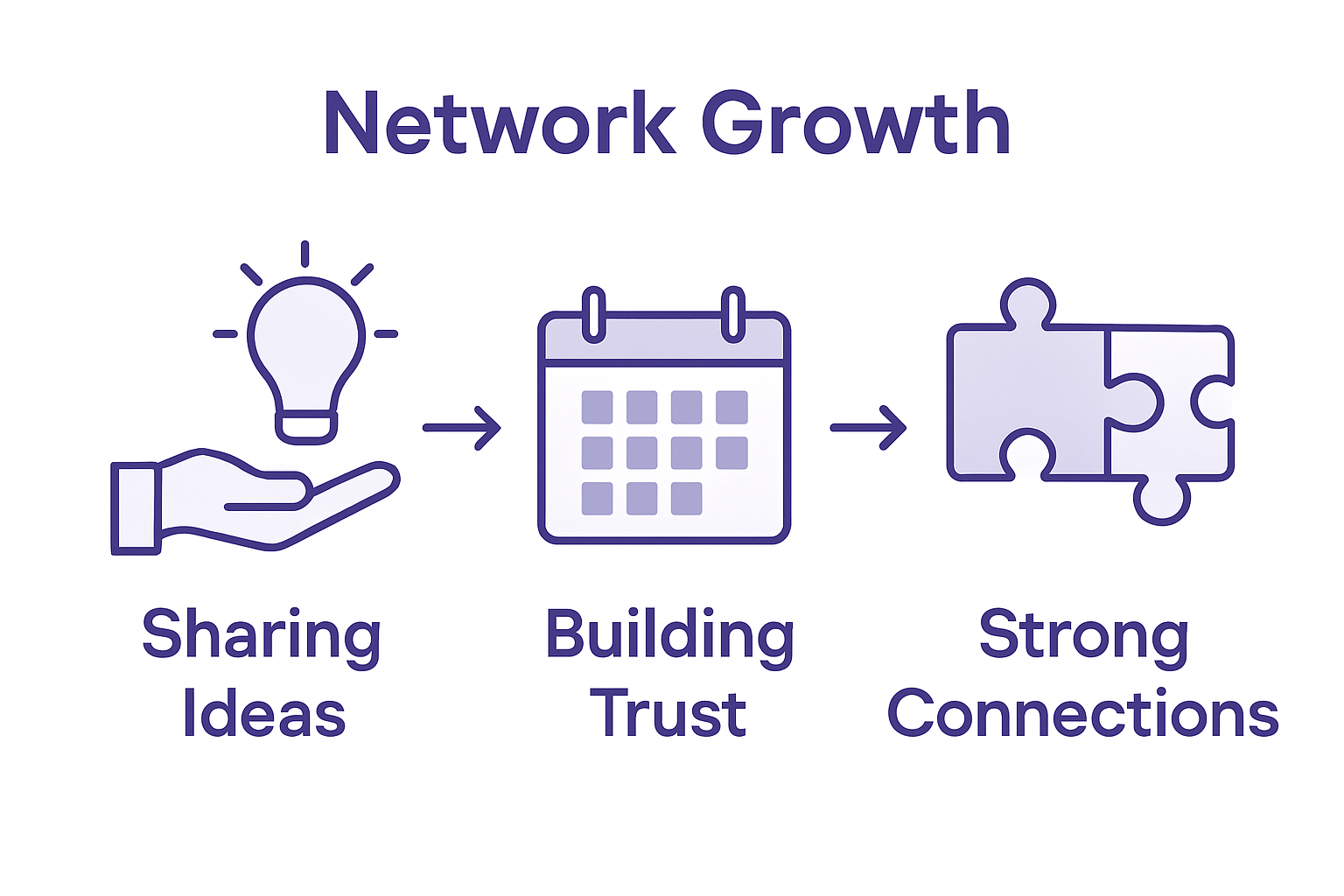
The resource-based view emphasizes leveraging your unique capabilities to create distinctive value. In professional markets across South Florida like Miami and Doral, this means identifying specific ways your skills or knowledge can benefit potential partners. Consider your organization’s strengths. Are you exceptional at solving complex problems? Do you have insights into industry trends? Can you make introductions that might benefit others? For instance, a printing services professional might offer graphic design recommendations or share market intelligence about emerging marketing trends.
Strategic alliances thrive on mutual benefit. Think beyond immediate business transactions and focus on how you can genuinely support your network’s broader objectives. This could involve sharing relevant industry research, connecting professionals who might collaborate, or providing complimentary expertise that demonstrates your commitment to collective success. In areas like Coral Gables or Fort Lauderdale, professionals who consistently add value build reputations that attract high quality partnerships.
Pro Tip: Approach networking as an opportunity to contribute rather than expecting immediate returns.
Value provision is a long term investment in your professional relationships. Your authentic contributions will naturally attract meaningful connections and opportunities. The next phase involves transforming these supportive interactions into strategic collaborative ventures that benefit all participants.
Step 5: Evaluate Relationship Outcomes and Adjust Strategies
Successful business relationships require continuous assessment and strategic refinement. Your objective is to develop a systematic approach for measuring partnership effectiveness and making intelligent adaptations that drive long term collaborative success.
The BSC SWOT analysis provides an excellent framework for comprehensive relationship evaluation. In professional environments across South Florida like Miami and Doral, this means creating a multidimensional assessment strategy. Examine your business relationships through four critical perspectives: financial performance, client satisfaction, internal process efficiency, and learning potential. For printing services professionals or event planners in Coral Gables, this might involve tracking metrics such as project completion rates, revenue generated from collaborative efforts, client feedback scores, and knowledge transfer opportunities.
The Market Opportunity Navigator offers additional insights for strategic relationship assessment. Look beyond surface level metrics to understand the deeper potential of your professional connections. Evaluate each relationship against key criteria such as alignment with your business goals, potential for innovation, scalability of collaborative efforts, and mutual growth potential. In areas like Fort Lauderdale, successful professionals recognize that relationship evaluation is not about finding perfect partnerships but identifying opportunities for mutual growth and strategic alignment.
Pro Tip: Conduct periodic relationship reviews every six months to ensure continuous improvement and alignment.
Relationship evaluation is an ongoing process of discovery and adaptation. Your willingness to objectively assess partnerships and make thoughtful adjustments will determine your long term networking success. The final step involves integrating these insights into a dynamic relationship management approach that evolves with your professional journey.
Strengthen Your Business Network with Powerful Printing Solutions
Building lasting business relationships requires trust, value, and consistent communication as highlighted in the article “How to Build Business Relationships for Lasting Success.” We understand the challenge of standing out and providing real value to your partners and clients. Whether you need to make memorable first impressions with professional signage or enhance your event presence with custom tradeshow displays, Titans of Print has you covered. Our comprehensive range of services—from channel letters and acrylic logo lobby signs to banners and promotional products—allows you to showcase your brand with confidence in Miami, Doral, Coral Gables, and beyond.
Partner with us to elevate your business collaborations. Start your journey of offering real value through visually striking materials that reinforce your professionalism and commitment to quality. Explore how our printing services can help you create meaningful connections and trust. Ready to transform your brand visibility and foster strategic alliances? Visit Titans of Print today and discover tailored solutions designed to support your growth and success.
Frequently Asked Questions
How can I identify ideal business partners for building business relationships?
You can identify ideal business partners by mapping your current network and pinpointing gaps where collaborations can enhance your capabilities. Focus on finding professionals with complementary skills and shared values, such as those in adjacent industries, to build lasting partnerships.
What should I discuss during initial conversations with potential business partners?
During initial conversations, aim to create a comfortable environment by referencing shared connections or industry trends. Ask open-ended questions that invite dialogue, such as how their approach to a specific challenge might align with your strategies.
How often should I follow up with business connections?
You should follow up consistently, creating a regular communication rhythm with periodic check-ins and relevant insights. Aim to touch base every 6-8 weeks, ensuring your interactions are purposeful and demonstrate genuine interest in their objectives.
What are effective ways to provide value to my professional network?
To provide value, identify how your unique skills or knowledge can support your connections’ broader objectives. Offer to share industry insights, make introductions, or provide solutions to challenges, ensuring your contributions foster meaningful relationships and not just transactional exchanges.
How can I evaluate the effectiveness of my business relationships?
Evaluate the effectiveness of your business relationships by assessing financial performance, client satisfaction, and overall collaboration success. Conduct systematic reviews every six months to identify areas for improvement and strategic adaptations that promote mutual growth.
Recommended
- Successful Brand Building: How To Do It Properly
- Ultimate Small Business Checklist: Essential Things To Do When Starting A Small Business
- Practical Tips For Premium Business Cards
- Networking At Trade Shows In Florida: 2025 Success Guide
- 7 Inspiring Partner Relationship Management Examples for Success – Wisdom