
Dimensional Logo Sign Planning
Compare construction, finish, depth, mounting, and approval details for the actual logo and wall.
Need a quote?
What Should You Plan for a Dimensional Logo Sign?
Dimensional logo signs turn approved brand artwork into physical components with visible depth, defined faces, edges, and mounting choices. They can be built as individual letters, layered marks, or a logo carried on a panel, depending on the artwork, wall, viewing distance, and desired visual hierarchy. Start with the logo files, finished size, photographs of the intended surface, and the way visitors approach the sign. Those details make it easier to compare materials, depth, finish direction, and mounting before the design reaches its final proof. The result should read clearly from the important viewpoints while fitting the actual space around it.
Which Details Affect the Final Dimensional Sign?
A dimensional sign is best planned as an assembly rather than a flat image with added thickness. Face treatment controls color and reflection; exposed edges shape the side view; spacing creates shadow; and the mounting method affects the wall, alignment, and future access. A carrier panel can simplify a detailed logo or create contrast against a busy background, while separate pieces leave more of the wall visible. Compare a front view and a side view with nearby trim, doors, furniture, and fixtures shown. That practical review helps the approved construction support the brand without introducing surprises at the wall.
DIMENSIONAL LOGO SIGNS
Dimensional logo signs planned around the brand, wall and finished viewing distance
Dimensional logo signs give a business name or mark real depth on the wall. Titans reviews the approved artwork, target size, material, layers, finish and mounting direction together so the sign reads clearly in its finished office, lobby or commercial setting.


COMPLETED TITANS WORK
Explore finished dimensional logo signs
Review real work for scale, depth, face treatment, installation context and the way the sign relates to its finished environment.


BUYER PLANNING
Choose the depth, layers and mounting around the real wall
Dimensional logo signs may be separate letters, layered components, a backer-panel build or a mixed-material wall feature. Start with the logo geometry, normal viewing distance, wall finish and desired visual weight, then review what the proof needs to show before production.
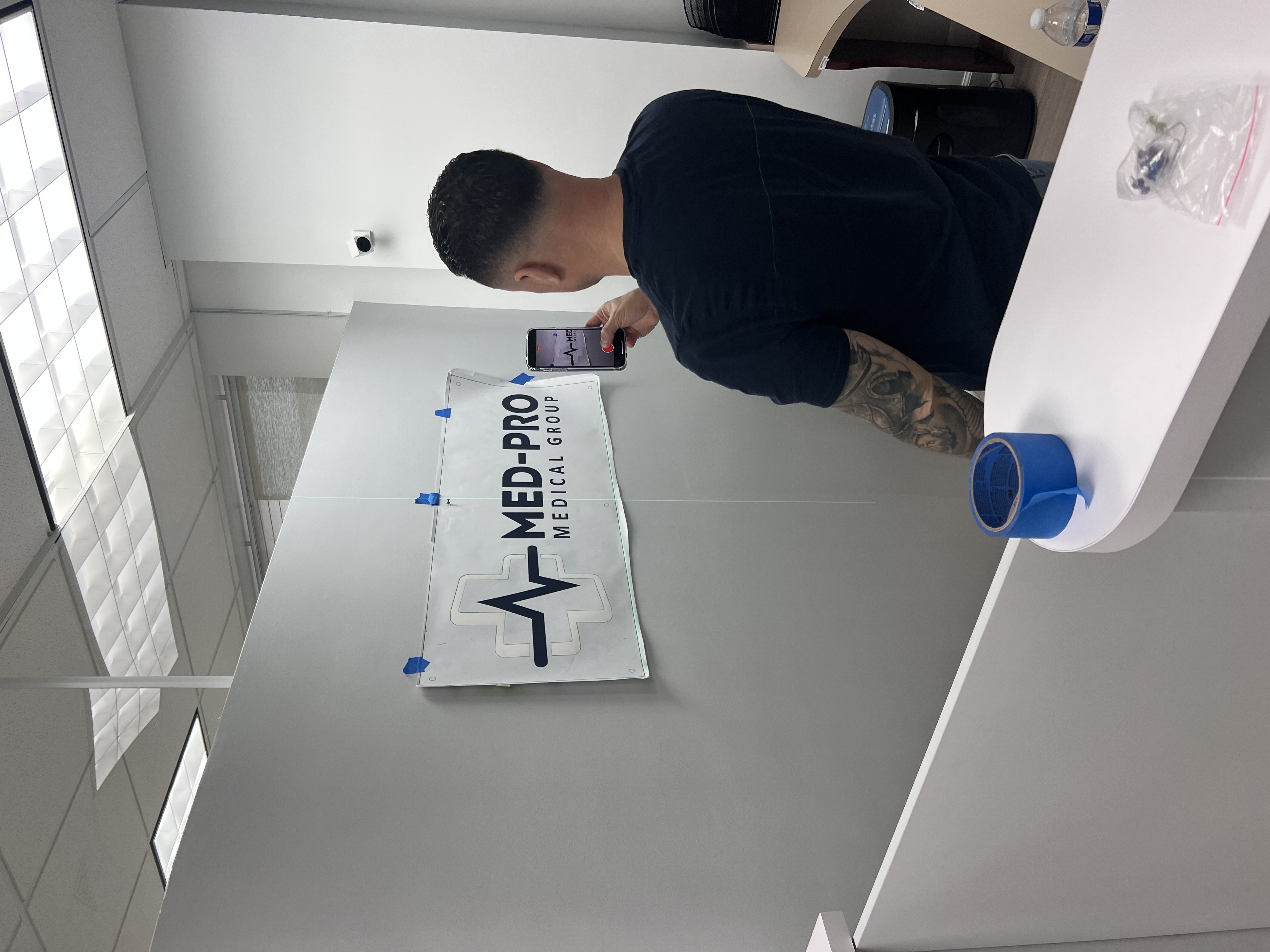
Letters, layers or backer panels
Separate letters leave more of the wall visible. A layered or backer-panel build can organize several components, color changes or printed details into one controlled composition.
Artwork at finished scale
Fine strokes, small counters, close spacing and separate pieces should be reviewed at the proposed dimensions. Titans can help prepare or repair the artwork before the proof is approved.
Mounting and wall conditions
Wall type, usable dimensions, access, property requirements and the number of pieces affect mounting. Local installation is confirmed after actual site conditions are reviewed.
Related sign directions
Compare custom acrylic signs, PVC 3D office signs, metal logo signs and wall logo signs when one construction is not yet decided.
THE FINISHED RESULT
The finished sign should make the brand easy to recognize
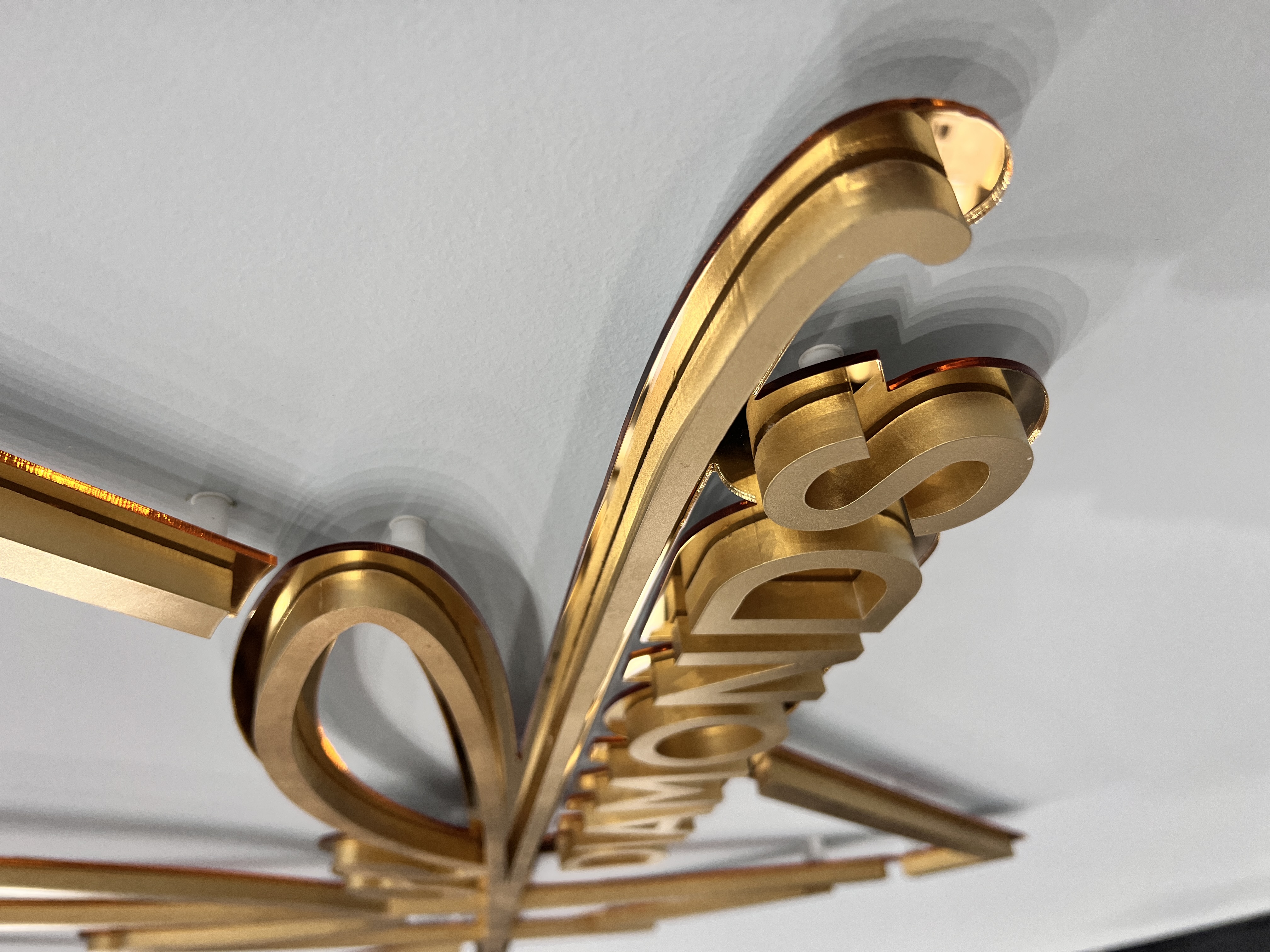
Depth, shadow, spacing, face treatment and the wall around the sign all change the arrival experience. The proof should show the complete composition at scale—not just an isolated logo file—so the approved construction matches the finished space.
CONSTRUCTION AND MOUNTING
Compare material, finish and construction as one decision
Acrylic can support crisp detail, clear faces and layered color. PVC is useful for substantial lightweight letters. Metal adds a different visual weight and reflected finish. The right route depends on the brand, setting and mounting plan rather than a generic material ranking.

1. Review the project
Confirm the logo, target size, viewing distance, wall or display surface, location and desired result.
2. Approve the proof
Review scale, finish, layers, face treatment, component order, spacing and mounting direction before production.
3. Produce and inspect
Titans prepares the approved construction, reviews the finished sign and plans the right packing or installation handoff.
4. Install or ship
South Florida installation is reviewed for the actual site. Suitable completed sign sets can ship nationwide with appropriate packaging and project information.
FREQUENTLY ASKED QUESTIONS
Questions before a custom sign is built
These answers address common planning decisions. The finished scope is reviewed against the specific artwork, environment, access and installation conditions.
How should a dimensional logo sign be planned?
Start with the approved logo, the main viewing distance, photographs of the intended wall, and the desired visual role. Individual components can preserve an open composition, while a backer can provide contrast and simplify a detailed arrangement. Compare material appearance, edge treatment, depth, spacing, and mounting as one system. The best direction is the one that keeps the mark clear in its actual setting and can be documented accurately in the final proof.
What should be included with a dimensional-logo request?
Bring the largest available vector logo, authorized brand rules, wall photographs, usable dimensions, placement reference, and any finish references. Also identify who can approve artwork, wall work, access, and the final proof. For a multi-part sign, ask for a drawing that shows component relationships, layer order, face and edge treatment, depth, mounting approach, and revision number. These inputs help the team resolve brand and site questions before the construction is released.
When do individual logo pieces or a backer make sense?
Individual letters and logo pieces keep more of the wall visible and create precise shadow lines, but each part must be located and mounted accurately. A shaped or opaque backer can control contrast, simplify a detailed mark, and reduce separate attachment points. A clear carrier retains more of the background but can make reflections and hardware more visible. Compare front and side views, cleaning needs, access, and the actual wall condition before choosing the assembly.
How should depth and powered elements be evaluated?
Depth should solve a visible need: separation from the background, a controlled shadow, side visibility, or a deliberate layered relationship. More projection can add cleaning surfaces and create conflicts near doors, trim, shelving, or circulation. Request a side elevation that includes nearby site conditions. Where a powered element is being considered, include clearance, routing, service access, responsible approvals, and property requirements in the scope rather than relying only on a front-view rendering.
SERVICE AND FULFILLMENT
South Florida installation and nationwide shipping

LOCAL PAGES
Find dimensional logo signs in your city
Choose your city for local planning notes on raised logo and letter signs. Your actual wall, artwork and property rules decide the final sign.
Miami-Dade
Broward
Palm Beach
Other areas
Outside these cities? See every South Florida area we serve on our locations page, or include your address in a quote request and we will confirm the installation or shipping options for your sign.
START THE PROJECT
Request a dimensional logo sign quote
Send the logo, approximate finished width and height, wall photographs, desired material or finish, project location and target date. The quote can then address the right construction, proofing, shipping and installation scope.
Share with #titansofprint
Follow @titansofprint for inspiration.


