

Business signs in Florida are more than decorations. They can influence customer decisions and drive your brand’s visibility in ways you might not expect. Here’s the kicker—Miami-Dade alone enforces over 30 unique sign regulations that can trip up even the most seasoned business owners. Most people focus on flashy colors or big lights, but they often miss the simple fact that your sign’s material, placement, and local laws could make all the difference in 2025.
Table of Contents
- Understanding The Main Types Of Business Signs
- Choosing The Best Sign For Your Florida Location
- Local Regulations For Business Signs In Miami And Beyond
- Tips For Customizing Business Signs Nationwide
Quick Summary
| Takeaway | Explanation |
|---|---|
| Choose Durable Materials | In Florida’s challenging climate, prioritize materials like aluminum and high-grade acrylic that can withstand UV rays, humidity, and potential hurricanes for long-lasting performance. |
| Understand Local Regulations | Each Florida municipality has specific regulations regarding sign dimensions, placement, and illumination. It’s essential to research and comply with these guidelines to avoid penalties. |
| Optimize Sign Placement for Visibility | Strategic placement of signs, considering viewing angles and surrounding structures, is crucial. Utilize pylon signs for long-distance visibility and monument signs for ground-level exposure to maximize customer attraction. |
| Employ Consistent Branding | Ensure that sign design, typography, and colors align with your overall brand identity to reinforce recognition and build consumer trust. |
| Balance Budget with Quality | While high-end signs offer superior impact, cost-effective alternatives can still effectively communicate your brand. Focus on clarity and professionalism to enhance long-term value. |
Understanding the Main Types of Business Signs
Business signs are essential communication tools that help organizations attract customers, convey brand identity, and provide critical information. Understanding the main types of business signs allows companies to make strategic visual communication decisions that maximize visibility and impact.
Exterior Signage Solutions for Maximum Visibility
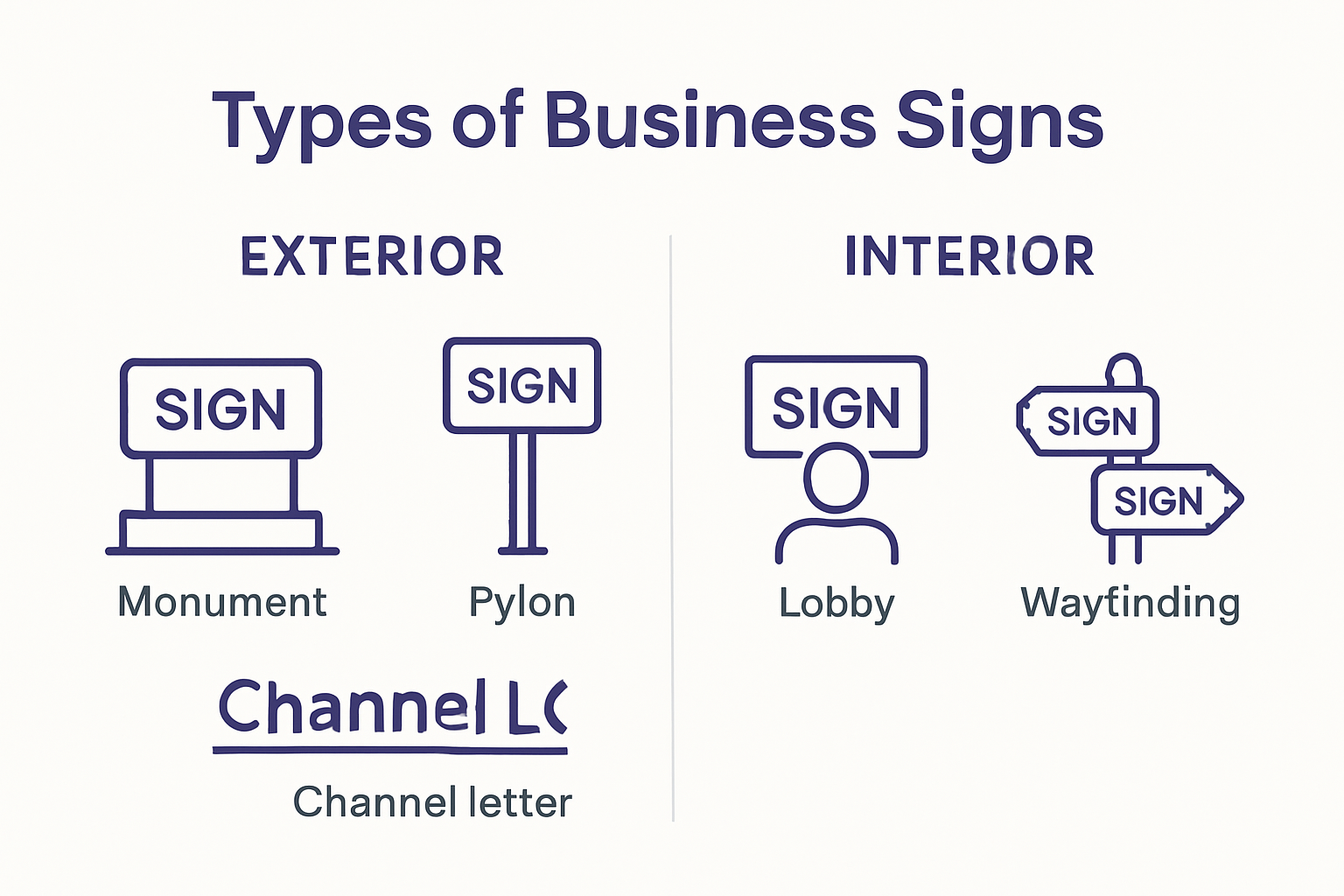
Exterior signs serve as powerful marketing assets that communicate a business’s presence and personality from a distance. Monument signs represent a premier option for businesses seeking sophisticated ground-level identification. These low-profile structures blend seamlessly with landscaping and architectural environments, offering a professional appearance that immediately signals a company’s location.
Pylon signs provide another robust exterior signage solution, particularly effective for businesses situated in complex commercial areas or along high-traffic roadways. Standing tall on supportive poles, these signs offer exceptional visibility from considerable distances, making them ideal for shopping centers, hotels, and businesses requiring prominent street-level recognition.
Channel letter signs represent a cutting-edge exterior signage approach that combines aesthetic appeal with practical functionality. These three-dimensional, often illuminated letters create a distinctive visual representation of a business’s brand. Mounted individually, they can transform building facades into dynamic marketing platforms that capture attention both during daylight and nighttime hours.


Here’s a summary table comparing the main types of exterior business signs discussed above, highlighting their key features and ideal uses:
| Sign Type | Key Features | Best For |
|---|---|---|
| Monument Signs | Low-profile, blends with landscaping, professional appearance | Ground-level identification, corporate offices, institutions |
| Pylon Signs | Tall, highly visible, supported by poles | Shopping centers, hotels, highway frontage |
| Channel Letter Signs | 3D, often illuminated, mounted individually | Building facades needing dynamic branding |
Interior Signage and Branding Strategies
While exterior signs attract initial attention, interior signs play a crucial role in guiding customer experiences and reinforcing brand messaging. Lobby signs featuring dimensional logos and company names create immediate professional impressions for visitors. These signs typically incorporate high-quality materials like acrylic, metal, or custom-fabricated elements that reflect a company’s aesthetic and values.
Wayfinding signs represent another critical interior signage category, helping customers navigate complex spaces efficiently. Well-designed wayfinding systems minimize confusion, reduce customer frustration, and demonstrate organizational professionalism. These signs often utilize consistent color schemes, typography, and visual language that align with a company’s broader branding strategy.
Strategic Considerations for Sign Selection
Selecting the appropriate business sign involves careful evaluation of multiple factors. Location plays a pivotal role in determining sign type and design. Urban environments might require more compact, sophisticated signage solutions, while suburban or rural areas could accommodate larger, more elaborate displays.
Regulatory considerations also significantly impact sign selection. Local zoning laws, historical district guidelines, and municipal ordinances can impose specific restrictions on sign dimensions, materials, and illumination. Businesses must work closely with local authorities and professional sign manufacturers to ensure compliance while maximizing visual communication potential.
Budget represents another critical factor in sign selection. While high-end channel letter signs offer exceptional visual impact, more economical options like vinyl graphics or basic monument signs can still effectively communicate a business’s identity. Explore our comprehensive guide on effective signage design to understand how strategic design choices can optimize your investment.
Ultimately, business signs are more than mere identification markers. They represent dynamic communication tools that bridge the gap between a company’s physical presence and its brand narrative. By understanding the nuanced landscape of sign types, businesses can craft visual experiences that attract, inform, and inspire potential customers.
Choosing the Best Sign for Your Florida Location
Selecting the right business sign in Florida requires careful consideration of unique environmental factors, local regulations, and marketing objectives. The Sunshine State presents distinctive challenges and opportunities for businesses seeking to create impactful visual communication strategies.
Climate Considerations for Sign Selection
Florida’s intense sunlight, high humidity, and potential hurricane conditions demand robust sign solutions that can withstand extreme weather. Businesses must prioritize materials and construction techniques that resist UV degradation, moisture, and potential wind damage. Aluminum and high-grade acrylic materials offer exceptional durability, providing long-lasting performance in Florida’s challenging climate.
Metal channel letter signs represent an ideal solution for businesses seeking resilience and visual appeal. These three-dimensional signs feature individual letters constructed from sturdy materials that can endure intense sunlight and occasional tropical storms. Powder-coated finishes provide additional protection against corrosion and color fading, ensuring a professional appearance year-round.
Strategic Placement and Visibility Factors
Location plays a critical role in sign effectiveness across Florida’s diverse commercial landscapes. Urban centers like Miami and Orlando require different signage approaches compared to smaller coastal towns or suburban areas. Businesses in high-traffic corridors need signs that capture attention quickly, utilizing bold designs and strategic illumination.
Pylon signs emerge as an excellent option for businesses located near highways or in commercial complexes. These tall, freestanding structures provide exceptional visibility from significant distances, crucial for attracting potential customers driving through busy Florida roadways. Monument signs offer an alternative for businesses seeking a more integrated, ground-level approach that complements local architectural styles.
Regulatory and Design Considerations
Navigating Florida’s local sign ordinances presents a complex challenge for businesses. Each municipality maintains specific regulations regarding sign dimensions, placement, and illumination. Miami-Dade County, for instance, has stringent guidelines that differ from regulations in smaller communities like Coral Gables or Fort Lauderdale.
Before investing in a sign, businesses must conduct thorough research with local authorities. Zoning restrictions can significantly impact sign design, with some historic districts imposing strict aesthetic requirements. Working with professional sign manufacturers who understand local regulations becomes essential in creating compliant and effective signage.
Budget considerations also play a crucial role in sign selection. While high-end channel letter signs offer maximum visual impact, businesses can explore cost-effective alternatives that still communicate their brand effectively. Learn more about navigating sign design challenges to make informed decisions that balance quality and affordability.
Ultimately, the perfect business sign in Florida combines durability, visibility, regulatory compliance, and brand representation. By carefully evaluating environmental challenges, local regulations, and marketing objectives, businesses can create signage that not only survives but thrives in the unique Florida commercial landscape. The right sign serves as more than a mere identifier it becomes a powerful marketing tool that attracts customers and communicates a business’s professional identity.
The following table summarizes the main factors to consider when choosing a business sign for Florida, with typical examples from the content:
| Factor | Why It Matters | Typical Solutions/Examples |
|---|---|---|
| Climate Durability | Resists UV, humidity, hurricanes | Aluminum, high-grade acrylic, powder coating |
| Placement/Visibility | Maximizes exposure to target customers | Pylon signs (highways), monument signs (ground-level) |
| Local Regulations | Compliance with municipal codes | Work with local authorities, adjust size/illumination |
| Budget | Matches business resources to sign quality | Channel letters (high-end), vinyl graphics (budget) |
| Branding Consistency | Ensures alignment with overall brand identity | Custom colors, typography, logo integration |
Local Regulations for Business Signs in Miami and Beyond
Business signs represent complex legal territories where aesthetic considerations intersect with strict municipal regulations. Understanding these guidelines becomes crucial for businesses seeking to establish a professional visual presence while maintaining full legal compliance across Florida’s diverse urban landscapes.
Navigating Miami-Dade County Sign Ordinances
Miami-Dade County maintains intricate sign regulations that businesses must carefully navigate. Each municipality within the county implements unique requirements regarding sign dimensions, placement, materials, and illumination. Urban centers like Miami and Miami Beach enforce particularly stringent guidelines that demand meticulous attention to detail.
Zoning classifications play a pivotal role in determining sign specifications. Commercial districts typically allow more expansive signage compared to residential or historic areas. Businesses must consider factors such as total sign area, height restrictions, and proximity to public rights-of-way. These regulations aim to balance visual communication needs with community aesthetic standards and public safety considerations.
Specific restrictions often target illumination methods, material selections, and mounting techniques. Internally illuminated signs might require additional permits, while externally lit channel letter signs could have distinct regulatory requirements. Local authorities prioritize ensuring that signs do not create visual clutter or pose potential safety hazards to pedestrians and drivers.
Permit Requirements and Compliance Strategies
Obtaining proper permits represents a critical step in sign installation across Florida. Most municipalities mandate comprehensive documentation including detailed sign designs, structural specifications, and precise location plans. Miami Beach and Fort Lauderdale, for instance, require businesses to submit comprehensive permit applications that demonstrate compliance with local building codes and zoning regulations.
The permitting process typically involves multiple municipal departments. Businesses must coordinate with zoning boards, building departments, and sometimes historical preservation committees. Each review stage examines aspects like structural integrity, visual impact, and alignment with community design standards. Learn more about navigating Miami Beach signage requirements to streamline your compliance process.
Potential penalties for non-compliance can be substantial. Violations might result in significant fines, mandatory sign removal, or legal complications that could disrupt business operations. Proactive engagement with local authorities and professional sign manufacturers helps mitigate these risks.
Regional Variations and Specialized Considerations
Florida’s diverse municipalities present unique regulatory landscapes. While Miami-Dade County maintains relatively uniform guidelines, smaller communities like Coral Gables or Key West might impose additional aesthetic restrictions. Historic districts often implement more conservative signage standards to preserve architectural character.
Commercial zones in urban centers differ dramatically from regulations in suburban or rural areas. Businesses must conduct thorough research specific to their exact location, understanding that a sign permitted in downtown Miami might not meet requirements in a neighboring municipality.
Environmental considerations also factor into sign regulations. Coastal areas might impose additional wind-resistance requirements, while regions prone to hurricanes mandate enhanced structural standards. Materials and mounting techniques must demonstrate resilience against Florida’s challenging climate conditions.
Successful sign implementation requires a strategic approach that balances creative branding with legal compliance. By understanding local regulations, consulting professional sign manufacturers, and maintaining open communication with municipal authorities, businesses can create impactful signage that meets both marketing objectives and regulatory standards.
Ultimately, navigating sign regulations is not merely about legal compliance but about creating visual communication that respects community standards while effectively representing a business’s professional identity.
Tips for Customizing Business Signs Nationwide
Customizing business signs requires a strategic approach that balances brand identity, visual communication, and practical functionality. Successful sign design transcends mere aesthetic considerations, serving as a critical marketing tool that communicates a company’s professional essence and attracts potential customers.
Typography and Visual Design Fundamentals
Typography represents the cornerstone of effective sign design. Businesses must select fonts that balance readability with brand personality. Sans-serif fonts like Arial or Helvetica offer clean, modern appearances ideal for contemporary brands, while serif fonts can communicate traditional professionalism. Font size and spacing play crucial roles in ensuring visibility from various distances.
Color selection demands careful strategic planning. High-contrast color combinations maximize readability and visual impact. Bold colors like deep blues, vibrant reds, and crisp blacks create striking visual statements that capture attention quickly. Companies should consider color psychology, understanding how specific hues communicate different emotional responses and brand attributes.
Brand consistency emerges as a critical consideration in sign design. The visual elements incorporated into signage should seamlessly align with a company’s broader marketing materials, website design, and overall brand identity. This holistic approach reinforces brand recognition and builds consumer trust through professional presentation.
Material Selection and Durability Strategies
Choosing appropriate materials represents a fundamental aspect of sign customization. Aluminum offers exceptional durability and lightweight properties, making it ideal for exterior signs exposed to varying environmental conditions. Acrylic provides a sleek, modern appearance with excellent color retention and resistance to weathering.
Metal channel letters represent a premium option for businesses seeking sophisticated signage solutions. These three-dimensional letters can be fabricated with various finishes including brushed steel, polished chrome, or powder-coated colors. Illumination options such as LED backlighting or front-lit configurations add another layer of visual sophistication and nighttime visibility.
Environmental considerations play a significant role in material selection. Signs must withstand local climate conditions, whether dealing with intense sunlight, humidity, cold temperatures, or potential extreme weather events. Discover expert strategies for designing commercial building signs to ensure long-lasting performance and visual appeal.
Strategic Placement and Visibility Optimization
Effective sign placement requires understanding spatial dynamics and viewer perspectives. Businesses must consider viewing angles, distance, and potential visual obstructions. Monument signs work exceptionally well for ground-level visibility, while pylon signs maximize recognition from greater distances.
Modern sign design increasingly incorporates digital technologies. LED message boards and dynamic display systems allow businesses to update content rapidly, providing flexibility in marketing communications. These technologies enable real-time information sharing and create engaging visual experiences that static signs cannot match.
Budget considerations remain essential in sign customization. While high-end solutions offer maximum visual impact, businesses can achieve professional results through strategic design choices that prioritize clarity and brand representation. Investing in quality design and durable materials ultimately provides better long-term value compared to frequent replacements.
Ultimately, business signs serve as silent ambassadors of a company’s brand. By carefully considering design elements, material selection, and strategic placement, businesses can create signage that not only attracts attention but communicates professionalism, reliability, and unique brand identity. The most effective signs transform from mere identification markers into powerful marketing tools that engage and inspire potential customers.
Frequently Asked Questions
What are the most common types of business signs in Florida for 2025?
Exterior signs like monument signs, pylon signs, and channel letter signs are the most common types, each providing unique visibility and branding benefits.
How do climate conditions in Florida affect business sign materials?
Florida’s intense sunlight, high humidity, and hurricane risks require durable materials like aluminum and high-grade acrylic to withstand environmental challenges and maintain long-lasting performance.
What regulations should businesses in Miami-Dade County consider for signage?
Businesses must comply with local sign ordinances that specify dimensions, placement, and illumination. Each municipality has unique rules, so it’s essential to research and secure any necessary permits before installation.
How can businesses optimize sign placement for maximum visibility?
Strategic placement involves considering viewing angles, distance from the road, and potential obstructions. Using pylon signs for high traffic areas and monument signs for ground-level visibility can significantly enhance customer attraction.
Transform Your Florida Business With Signs Built to Last
Frustrated by Florida’s tough climate, tricky regulations, and the overwhelming choices for business signage? You read how even a small mistake with materials, placement, or local permitting can set you back. It is time to put that stress behind you. At Titans of Print, we specialize in sign solutions that are engineered for Miami’s sun, humidity, and hurricane events. Whether you need durable pylon signs to command attention or sophisticated acrylic logo lobby signs to make a lasting impression, our team handles everything—including compliance, permitting, and tailored design guidance.
Don’t let confusing codes, inferior materials, or missed branding opportunities hold your company back. Visit Titans of Print to start your signage upgrade. Ready to secure a sign that truly works for your business in 2025? Explore our building sign solutions for Florida businesses and get a quote today. Our experts are standing by to deliver visual impact and peace of mind.