


Most American businesses believe their products should appeal to everyone, but research shows that nearly 70 percent of marketing dollars are wasted when the target audience is unclear. Defining who you are truly speaking to can mean the difference between growth and missed opportunity. This guide debunks persistent myths about audience identification and unlocks smarter ways to connect your message with the people most likely to engage.
Table of Contents
- Defining Target Audience And Common Myths
- Types Of Market Segmentation Explained
- Key Characteristics For Precision Targeting
- Essential Research Methods For Miami Businesses
- Risks And Mistakes In Audience Identification
Key Takeaways
| Point | Details |
|---|---|
| Define Your Target Audience Accurately | Successful marketing requires a clear understanding of the specific group who will benefit from your product or service, rather than attempting to appeal to everyone. |
| Utilize Market Segmentation | Breaking down your market into distinct segments based on characteristics enhances targeted marketing strategies, improving communication and engagement with potential customers. |
| Apply the ADAMS Criteria | Assessing segments using the ADAMS criteria—Accessible, Differentiable, Actionable, Measurable, and Substantial—ensures focused and effective marketing initiatives. |
| Commit to Ongoing Research | Continuously gather and analyze data on consumer behaviors and preferences to adapt marketing strategies, ensuring relevance in a dynamic marketplace. |
Defining Target Audience and Common Myths
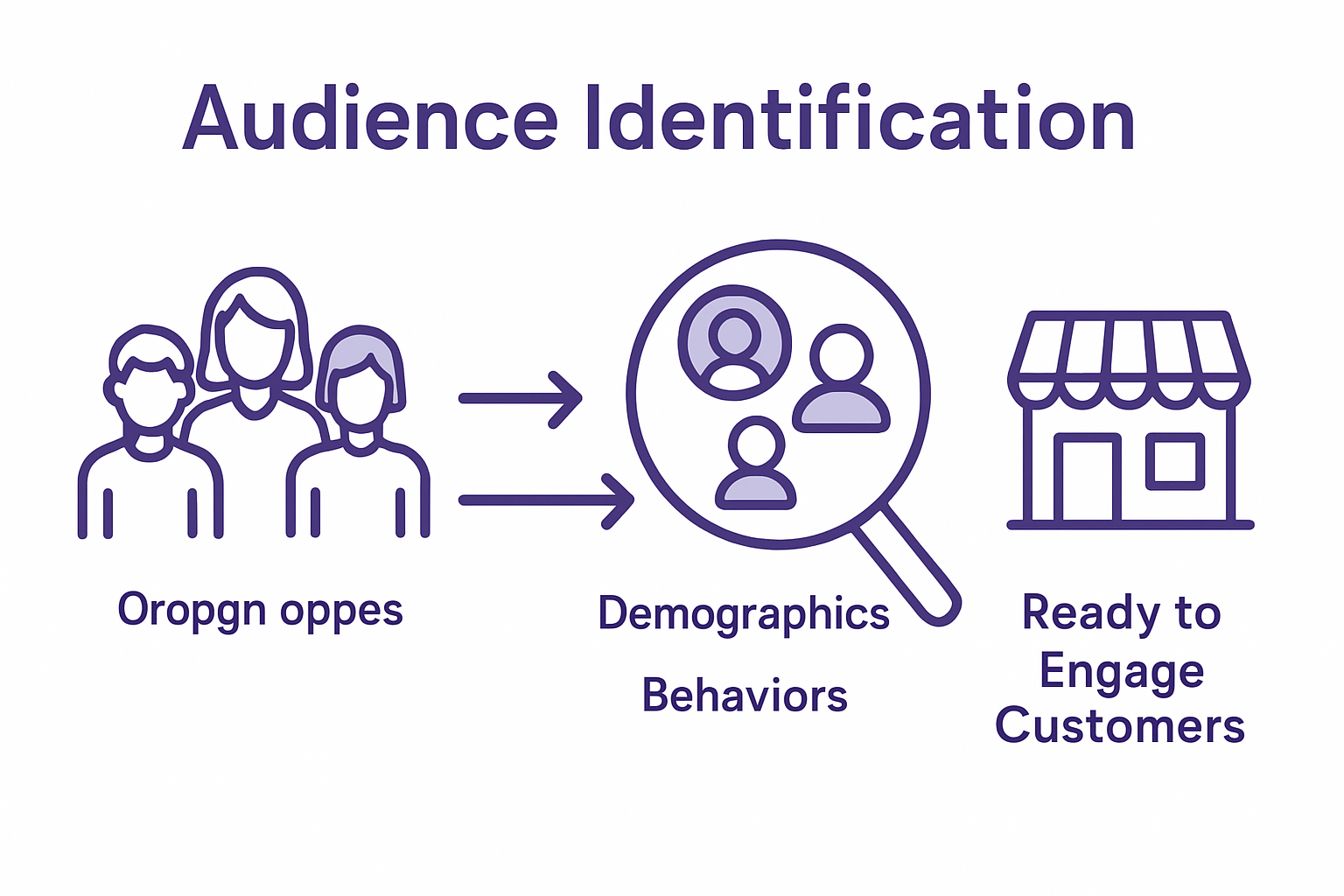
Understanding your target audience is more than just demographic guesswork – it’s a strategic approach to connecting with the most promising potential customers. At its core, a target audience represents the specific group of consumers most likely to engage with your product or service. This isn’t about casting a wide net, but precisely identifying who will find the most value in what you offer.
Common misconceptions about target audience identification can seriously derail marketing efforts. Many small business owners mistakenly believe their potential customer base includes everyone. Reality check: trying to appeal to everybody means you’ll effectively appeal to nobody. Successful businesses recognize that narrowcasting – focusing on a well-defined audience segment – delivers far more impactful results than generalized marketing approaches.
Key Target Audience Characteristics to Consider:
- Demographic details (age, income, education)
- Geographic location
- Professional background
- Specific needs and pain points
- Purchasing behaviors
- Technological comfort levels
Businesses across South Florida – from Miami to Fort Lauderdale – can dramatically improve their marketing effectiveness by truly understanding their audience’s unique attributes. The goal isn’t just identifying who might buy, but comprehending why they would choose your specific product or service. This depth of understanding transforms generic marketing into precision communication that resonates deeply with potential customers.
Beyond basic segmentation, successful target audience identification requires ongoing research and adaptation. Consumer preferences shift, technologies evolve, and market dynamics change. Businesses that remain flexible and committed to understanding their audience will consistently outperform those relying on outdated assumptions. Your target audience is not a static concept – it’s a living, breathing entity that demands continuous attention and strategic refinement.
Types of Market Segmentation Explained
Market segmentation is a powerful strategic tool that allows businesses to divide their potential customer base into distinct groups with shared characteristics. By breaking down broad markets into more focused segments, companies can develop targeted marketing strategies that speak directly to specific consumer needs and preferences. This approach transforms generic marketing efforts into precision-driven communication that resonates more effectively with potential customers.
Five Primary Market Segmentation Types:
- Demographic Segmentation
- Age ranges
- Income levels
- Education background
- Marital status
- Occupation
- Geographic Segmentation
- Country
- Region
- City size
- Climate
- Population density
- Behavioral Segmentation
- Purchase history
- Brand loyalty
- Product usage rates
- Customer engagement
- Psychographic Segmentation
- Lifestyle preferences
- Personal values
- Social class
- Personality traits
- Attitudinal Segmentation
- Consumer beliefs
- Emotional responses
- Product perceptions
- Decision-making motivations
Businesses in South Florida – from Miami to Fort Lauderdale – can leverage these segmentation strategies to create highly targeted marketing campaigns. Each segmentation type offers unique insights into consumer behavior, enabling companies to craft messages that speak directly to specific audience groups. The magic happens when businesses combine multiple segmentation approaches, creating nuanced profiles that go beyond surface-level demographics.

Successful market segmentation is not a one-time exercise but an ongoing process of refinement and adaptation. Consumer preferences evolve, technological landscapes shift, and market dynamics continuously change. Smart businesses invest time in regularly reassessing their audience segments, using data-driven insights to stay ahead of emerging trends. By treating market segmentation as a dynamic, living strategy, companies can maintain relevance and build stronger connections with their target audiences.
Key Characteristics for Precision Targeting
Precision targeting requires a strategic approach that goes far beyond simple demographic analysis. The ADAMS criteria provide a robust framework for identifying and evaluating potential market segments with laser-focused accuracy. These five critical characteristics – Accessible, Differentiable, Actionable, Measurable, and Substantial – serve as a powerful diagnostic tool for businesses seeking to optimize their marketing strategies.
ADAMS Criteria Breakdown:
- Accessible:
- Can be effectively reached through marketing channels
- Clear communication pathways exist
- Realistic engagement potential
- Differentiable:
- Unique segment characteristics
- Distinct response patterns
- Meaningful variations from other groups
- Actionable:
- Segment responds to specific marketing approaches
- Potential for conversion is high
- Clear value proposition alignment
- Measurable:
- Quantifiable segment characteristics
- Data-driven insights available
- Trackable performance metrics
- Substantial:
- Segment large enough to be economically viable
- Significant revenue generation potential
- Sustainable market presence
Businesses across South Florida – from Miami to Fort Lauderdale – can dramatically enhance their marketing effectiveness by understanding volume segmentation. Not all customers are created equal. Identifying heavy users, moderate consumers, and light users allows for nuanced marketing strategies that allocate resources more intelligently. This approach transforms broad marketing efforts into precision-targeted campaigns that speak directly to each segment’s unique consumption patterns.
Successful precision targeting is an ongoing process of continuous refinement. Consumer behaviors shift, technologies evolve, and market dynamics change rapidly. Smart businesses treat their target audience segmentation as a dynamic, living strategy. By consistently collecting data, analyzing consumer interactions, and adapting targeting approaches, companies can stay ahead of emerging trends and maintain a competitive edge in an increasingly complex marketplace.
Essential Research Methods for Miami Businesses
Targeting the right audience requires a strategic blend of research methodologies that go beyond surface-level demographic analysis. For Miami businesses, understanding the unique market landscape means diving deep into comprehensive research techniques that reveal nuanced consumer insights. Market research becomes the critical compass guiding businesses through the complex terrain of customer preferences, behaviors, and potential opportunities.
Primary Research Methods for Miami Businesses:
- Surveys and Questionnaires
- Online digital surveys
- In-person intercept interviews
- Telephone research
- Social media polling
- Focus Groups
- Structured group discussions
- Neighborhood-specific panels
- Diverse demographic representation
- Customer Interviews
- One-on-one in-depth conversations
- Targeted customer segment exploration
- Qualitative insights gathering
- Competitive Analysis
- Local market benchmarking
- Competitor strategy assessment
- Performance metric comparison
- Data Analytics
- Website traffic analysis
- Social media engagement metrics
- Consumer behavior tracking
Businesses across South Florida can enhance their marketing strategies through comprehensive research techniques that capture the region’s dynamic consumer landscape. The multicultural nature of Miami demands a nuanced approach that goes beyond generic market research. Understanding local consumer behaviors, language preferences, and cultural nuances becomes crucial for developing targeted marketing campaigns that resonate authentically with diverse audience segments.
Successful market research is not a one-time event but an ongoing process of continuous learning and adaptation. Consumer preferences shift rapidly, technological platforms evolve, and economic conditions transform market dynamics. Smart Miami businesses invest in systematic research methodologies that provide real-time insights, enabling them to pivot quickly and stay ahead of emerging trends. By treating research as a dynamic, living strategy, companies can build resilient marketing approaches that connect meaningfully with their target audiences.
Risks and Mistakes in Audience Identification
Audience misidentification represents one of the most costly strategic errors a business can make. While many companies believe they understand their target market, subtle miscalculations can lead to significant marketing failures that drain resources and damage brand reputation. The challenge lies not in recognizing who your audience isn’t, but in precisely defining who they truly are – a nuanced process that requires meticulous analysis and continuous refinement.
Common Audience Identification Pitfalls:
- Overgeneralization
- Treating all customers as identical
- Ignoring demographic diversity
- Creating one-size-fits-all messaging
- Demographic Assumptions
- Relying on outdated statistical data
- Ignoring generational shifts
- Stereotyping consumer behaviors
- Data Collection Errors
- Incomplete survey sampling
- Biased research methodologies
- Insufficient data verification
- Technological Blindspots
- Neglecting digital consumer behaviors
- Failing to track online engagement
- Misunderstanding platform preferences
- Cultural Misalignment
- Overlooking local cultural nuances
- Generic communication strategies
- Lack of linguistic sensitivity
South Florida businesses can enhance their marketing precision by understanding potential research limitations that might skew audience identification. The multicultural landscape of Miami demands an exceptionally sophisticated approach to market segmentation. Businesses must move beyond surface-level demographics and develop deep, contextual understanding of their potential customer base, recognizing the complex interplay of cultural, technological, and behavioral factors.
Navigating audience identification is not about achieving perfect accuracy, but maintaining a dynamic, adaptive approach. Consumer preferences transform rapidly, technological platforms emerge constantly, and market dynamics shift unpredictably. Successful businesses treat audience research as an ongoing conversation – continuously collecting data, challenging existing assumptions, and remaining flexible enough to pivot when new insights emerge. The most dangerous mistake is not an incorrect initial assessment, but the failure to recognize and adapt when that assessment becomes outdated.
Connect with Your Ideal Audience Through Impactful Print Solutions
Identifying and understanding your target audience is essential for any business aiming to stand out in South Florida’s dynamic market. The challenge of precise audience segmentation, behavioral insights, and cultural nuances highlighted in the article demands marketing tools that deliver clear, compelling messages directly to your potential customers. Whether you need eye-catching building signs like channel letters or acrylic logo lobby signs to make a bold first impression or custom tradeshow displays and promotional products to engage your segmented audience, effective printing solutions make your brand memorable and accessible.
At Titans of Print, we specialize in turning your strategic audience insights into tangible marketing assets. From vibrant banners and backdrops that communicate your value proposition to business cards and flyers that leave an enduring impression, our services empower Miami businesses to reach their customers with precision. Don’t let your marketing messages get lost in the noise. Discover how our trade show displays and branded apparel can help you connect authentically with your target market now. Take the next step and elevate your local business impact with professional printing that speaks directly to the audience you have so carefully defined.
Frequently Asked Questions
What is a target audience?
A target audience is a specific group of consumers most likely to engage with your product or service, defined by shared characteristics such as demographics, behaviors, and needs.
Why is understanding my target audience important for my business?
Understanding your target audience is crucial because it enables you to create marketing strategies that resonate effectively with them, leading to higher engagement and conversion rates.
How can I identify the characteristics of my target audience?
You can identify your target audience’s characteristics by analyzing demographic details, geographic location, purchasing behaviors, and conducting market research, such as surveys and focus groups.
What are some common mistakes businesses make when identifying their target audience?
Common mistakes include overgeneralization, relying on outdated data, neglecting cultural differences, and failing to adapt to changing consumer behaviors.