

Cracker Barrel’s Rebranding Fiasco: A Marketing Lesson in Heritage, Politics, and Print
Cracker Barrel’s recent “All the More” rebranding, particularly its shift to a text-first logo, ignited a firestorm of public criticism, political commentary, and a significant market downturn. This deep dive explores the marketing missteps, the ensuing backlash, and crucial lessons for businesses, especially those in the print and signage industry, on navigating brand evolution.
The Rebranding Rollout: What Happened and Why It Blew Up
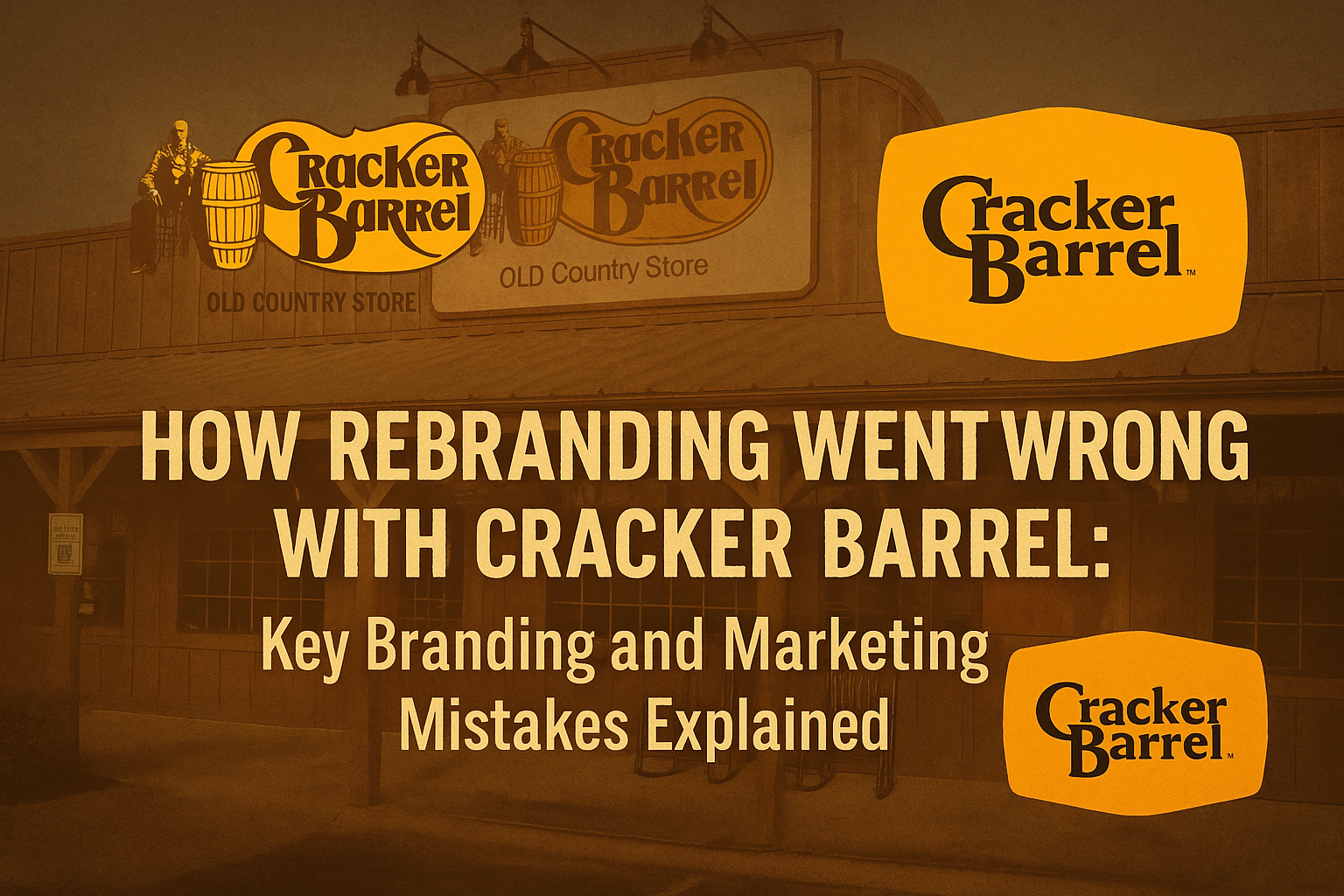
Cracker Barrel, under CEO Julie Felss Masino and CMO Sarah Moore, launched its “All the More” campaign, a multi-year initiative involving store remodels, menu tests, and a cleaner visual system. The most contentious element was the introduction of a new primary logo, a text-centric barrel shape, which dropped the beloved “Old Timer” (or “Uncle Herschel”) character that had been a core equity since 1977. This move, intended to modernize the brand, instead triggered a massive backlash, amplified by political figures and social media influencers.
The Logo’s History and the Shift
Cracker Barrel’s visual identity has evolved significantly. Originating with a text-only design in 1969, it later adopted the iconic “Old Timer + barrel” lockup in 1977. The 2025 rebrand saw a return to a text-centric approach for the primary mark, a decision that proved to be a critical misstep in managing brand equity and customer memory structures.
Marketing Messages That Missed the Mark
The campaign’s messaging, focusing on “crafted experiences” and “new energy,” contrasted sharply with the brand’s traditional emphasis on “family gatherings” and “home-style hospitality.” This linguistic shift, coupled with a heavy reliance on digital channels, alienated core diners who associate Cracker Barrel with comfort, tradition, and a welcoming atmosphere. The removal of heritage cues from primary signage, while retained internally, created a disconnect that fueled the negative sentiment.
Perception vs. Intent: When heritage art is removed, some readers will assume it’s tied to race or politics. If the motive is functional—scalability across channel letters, small formats, and menu typography—state that explicitly and show side-by-side signage use cases. Kill the rumor with receipts, not vibes.
The “Outrage Machine”: Political Framing and Influencer Amplification
The rebranding quickly became a political flashpoint. Figures like Donald Trump Jr. and Rep. Byron Donalds (FL) labeled it a “woke rebrand,” drawing parallels to other brands that faced backlash for perceived ideological shifts. Influencers like Benny Johnson amplified the criticism, with comparisons to the “Bud Light moment.” Even competitors, like Steak ‘n Shake, publicly criticized Cracker Barrel’s leadership, highlighting the intense scrutiny and the politicization of design choices in today’s polarized environment.
Politics & Positioning: In a polarized feed, silence is a position and so is a typeface. If you want to stay neutral, say so plainly: this change is about readability, manufacturing efficiency, and sign clarity—not ideology. Map your core audience by age, region, and media habits, then write the rollout copy to that map, not to Twitter/X.
Market Reaction: Stock Plunge and Eroded Value
The market responded swiftly and negatively. Cracker Barrel’s shares fell approximately 13–15% intraday on the announcement, closing around 7% down the following day. This translated to an estimated $94–$100 million in market capitalization erased on the day of the headline news, underscoring investor concern over the brand’s strategic direction and customer alienation.
Titans of Print Perspective: Lessons in Signage, Menus, and Brand Operations
For businesses in the print and signage industry, Cracker Barrel’s rebranding misstep offers invaluable insights into managing brand identity, customer perception, and the operational execution of marketing strategies. The core issue wasn’t just a logo change; it was a perceived erasure of heritage that resonated deeply with a loyal customer base.
Signage Systems: The Front Line of Brand Identity
The most visible change was the exterior signage. Replacing the character-driven logo with a text-first mark on primary building signs and highway pylons broke instant recognition for many. This highlights the critical role of signage in maintaining brand equity, especially for established brands with strong memory structures. For businesses like Titans of Print, this means:
- Transitional Identity: Consider keeping legacy elements as endorsed sub-marks on exteriors for a period. Pilot dual-lockups in select locations before national sign kit rollouts.
-
Neutral Visual Cues: Avoid activism-coded palettes or iconography in exterior kits unless it’s a deliberate stance. Keep the highway pylon and fascia packages strictly brand-color, legibility-first, and heritage-anchored; reserve culture messaging (if any) for opt-in interior zones where context can be explained.
- Phased Rollouts: Migrate menus, point-of-purchase materials, and merchandise first. Gather sentiment and sales data before updating building signs, tying them to remodel cadences.
- Narrative on the Door: Use vinyl door badges or entry plaques with historical context (“Since 1969”) and a QR code linking to a brand explainer.
- A/B Market Testing: Test different exterior sign packages (text-only, text with a small barrel badge, legacy medallion) to measure impact and customer feedback before mass fabrication.
-
Audience Gatekeeping: Pilot in stronghold markets first. If core guests reject the text-only look, deploy a sanctioned heritage badge on entrance plaques and monument bases for a defined period. Let the numbers, not the comments, decide the national kit.
- Channel Letters vs. Cabinets: Understand how different sign types (e.g., illuminated channel letters, cabinet signs, monument faces) can incorporate heritage cues while adhering to modern design principles and retrofitting existing infrastructure to manage capex.
Menu Design and Print Collateral: Reinforcing Heritage
Menus and in-store collateral are crucial touchpoints for reinforcing brand heritage. Cracker Barrel’s decision to retain heritage art inside, on menus, table tents, and retail headers, was a smart move to mitigate the impact of the primary logo change. For print providers, this offers opportunities to:
- Showcase Type Hierarchy: Ensure clear contrast ratios, especially for senior demographics, and use iconography that aligns with brand values.
- Nostalgia Storytelling: Leverage menu engineering to incorporate “nostalgia storytelling” through design elements, sectioning, and typography.
- Materiality Matters: Offer options like lamination and UV coatings that feel rustic yet read modern, enhancing the tactile experience.
- ADA Legibility: Prioritize accessibility in all print designs, ensuring readability for all customers.
- Story Before Stance: Use menus and table-tents to tell origin stories (dates, founders, craft processes) rather than slogans that read as political. Heritage copy converts better and offends fewer people than culture-war language from either side.
Environmental Branding and Wayfinding
The shift to “modern farmhouse” décor, while intended to update the interior, also presented challenges. For print and design firms, this means:
- Materiality and Texture: Utilize materials like painted PVC reliefs, woodgrain laminates, and brushed brass to create a cohesive “modern farmhouse” aesthetic that still evokes warmth.
- Zonal Branding: Implement distinct branding elements in different areas of the store to guide traffic flow and enhance the customer experience.
- Wayfinding: Develop color-material studies that blend warm woodgrains, aged brass, and painted PVC relief lettering to ensure stores still “read” as Cracker Barrel from the parking lot, even with a simpler logo.
- Context Zones Beat Catch-Alls: If you choose to acknowledge Pride, Veterans, or local causes, place that content on interior feature walls with a short explanation. Keep exterior windows, pylons, and highway boards strictly product, value, and hospitality so you don’t turn the parking lot into a referendum.
Cracker Barrel’s Recovery Attempts and Lessons Learned
In response to the overwhelming backlash, Cracker Barrel began a recovery process, emphasizing that its core values “haven’t changed” and that heritage elements remain present in-store and on menus. They launched a guest feedback portal and adjusted marketing copy to re-emphasize “home-style hospitality.”
Key Pitfalls to Avoid in Rebranding
- Neglecting Emotional Heritage: Over-focusing on modern aesthetics at the expense of customer nostalgia and emotional connections is a critical error.
- Underestimating Signature Elements: Stripping away familiar design cues and taglines can break established emotional bonds.
- Insufficient Customer Validation: Failing to conduct thorough qualitative testing with loyal customers before a rollout leads to significant misalignments.
- Shifting Core Narratives: Marketing language that clashes with the brand’s established storytelling can confuse and alienate the core audience.
- Ignoring Incremental Transitions: Radical overhauls are jarring; phased changes allow customers to adapt more smoothly.
-
Name the Rumor: Address the race/“why we removed the character” rumor head-on in a single, factual paragraph. Then redirect to proof points customers feel—menu clarity, faster service times, and warmer in-store materials—so the story moves from politics to experience.
-
Treat Politics as a Risk, Not a Strategy: Don’t ship identity work that can be read as a political signal unless leadership is prepared to own it across channels and quarters. If neutrality is the aim, your rollout must say “why” in plain English and show where heritage still lives.
Best Practices for Future Rebranding
- Multi-Phase Research: Utilize surveys, focus groups, and A/B testing to validate concepts before full implementation.
- Tie New Elements to Heritage: Craft messaging that explicitly connects new branding to existing heritage values.
- Monitor Sentiment in Real Time: Employ social listening tools to track reactions and adjust tactics dynamically.
- Foster Co-Creation: Engage long-time patrons in workshops or pilot programs to build advocacy for changes.
- Own the “Why” Page: Publish a brand-system explainer detailing design choices and the continued presence of heritage elements.
- Merchandise the Moment: Turn customer engagement into opportunities with heritage-themed merchandise, transforming outrage into earned media.
- Operational Wins > Logo Talk: Tie identity changes to tangible improvements in service speed, menu clarity, and comfort items to shift focus from logo debates to positive customer experiences.
- Politics & Audience Playbook:
• Pre-mortem three scenarios—left backlash, right backlash, and fatigue—and pre-write the FAQ.
• Designate a single spokesperson and a 72-hour response cadence.
• Publish a “Why This Design Works in Signs & Menus” explainer with file-size, legibility, and fabrication rationale.
Balancing Tradition and Innovation
Successful rebranding requires a delicate balance. Brands must ensure modernization efforts enhance, rather than erase, core values and emotional connections. Cracker Barrel’s experience serves as a stark reminder that evolution must be guided by a deep understanding of customer loyalty, emotional resonance, and the enduring power of heritage. For businesses of all sizes, especially those relying on print and signage to communicate their brand, thoughtful strategy, thorough testing, and a deep respect for customer connection are paramount to avoiding costly missteps.
Navigate Your Brand’s Evolution with Confidence
Don’t let rebranding challenges derail your business. At Titans of Print, we help you craft compelling visual identities that honor your heritage while embracing modern appeal. From impactful signage to meticulously designed menus, we provide the expertise to ensure your brand’s message resonates with your audience.
Applying this guide to a real business logo signs project
This guide becomes more useful when its advice is connected to a real project decision. A reader moving from the topic above into a purchase or planning conversation should define the intended result, the setting, the artwork or information available, and any practical constraints before requesting a recommendation.
For the service-level framework behind that decision, review business logo signs. It is the commercial owner for this next step, while this article remains the supporting educational resource.