


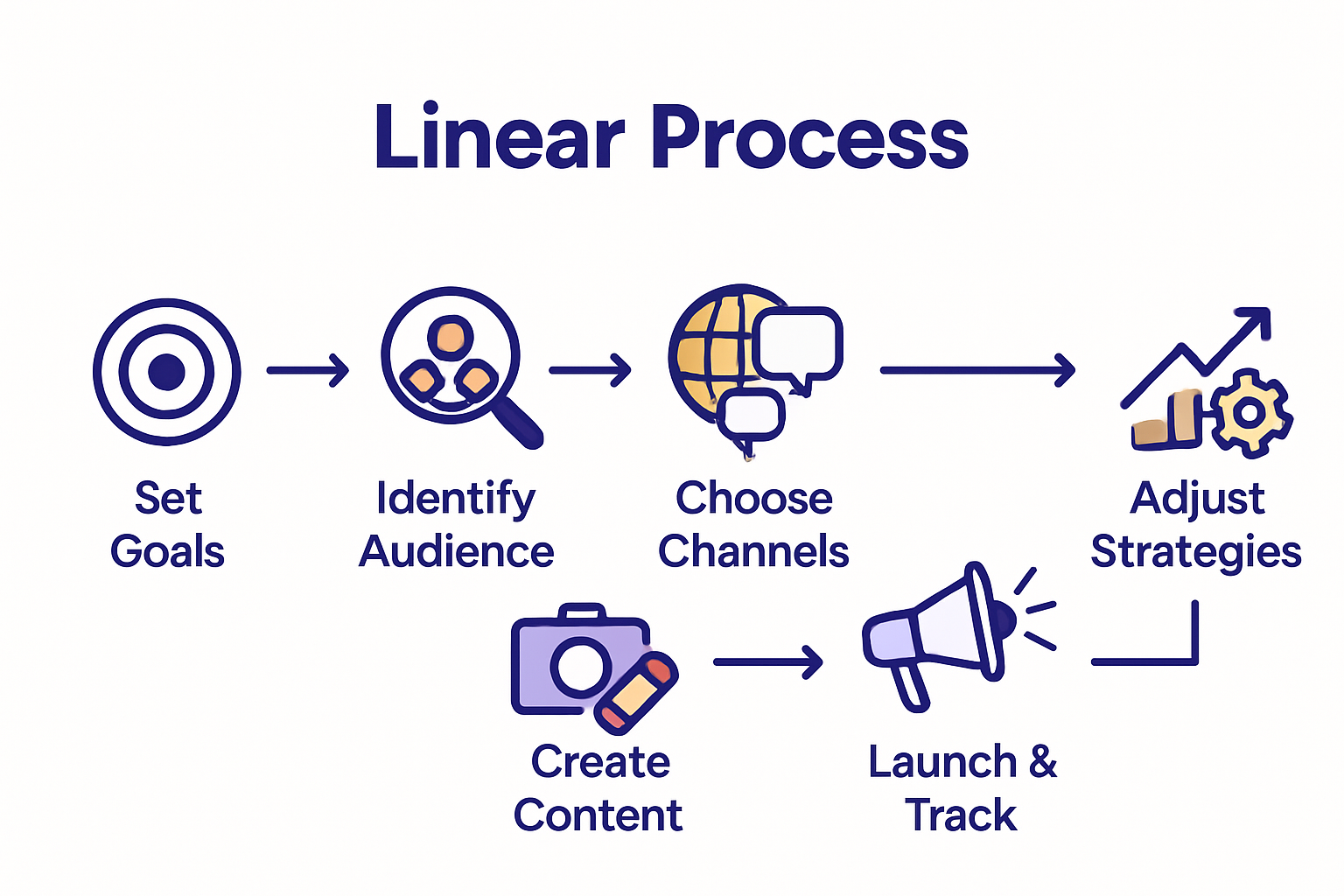
Nearly every american business owner wants to see real growth, yet over 70 percent struggle to turn digital marketing efforts into lasting results. With online competition heating up across South Florida, knowing exactly where to focus is more urgent than ever. By learning how to set specific goals, identify your audience, select the right platforms, and track results, you can finally create a strategy that brings your business measurable success.
Table of Contents
- Step 1: Define Your Digital Marketing Goals
- Step 2: Identify Your Target Audience And Local Market
- Step 3: Select The Best Online Marketing Channels
- Step 4: Create Compelling Content And Visuals
- Step 5: Launch Campaigns And Track Key Metrics
- Step 6: Adjust Strategies Based On Performance Data
Quick Summary
| Key Point | Explanation |
|---|---|
| 1. Set Clear Digital Marketing Goals | Establish specific, measurable, and achievable goals to guide your marketing efforts and align with business objectives. |
| 2. Understand Your Target Audience | Segment your market by demographics and create customer personas to tailor messages that resonate with ideal clients. |
| 3. Choose Effective Online Marketing Channels | Identify relevant digital platforms where your audience is active, and allocate budget for testing and optimizing them. |
| 4. Create Engaging Content and Visuals | Develop high-quality content and visuals that address customer needs and uphold consistent branding across all platforms. |
| 5. Monitor Campaign Performance and Adjust | Use analytics to track metrics and refine strategies based on performance data for continuous improvement and maximum ROI. |
Step 1: Define your digital marketing goals
Establishing clear digital marketing goals is the foundational strategy that transforms scattered efforts into purposeful business growth. Your goals will serve as the compass guiding every marketing decision, ensuring your resources are invested strategically and your campaigns deliver measurable results.
Start by conducting a thorough assessment of your current business objectives and identifying specific outcomes you want to achieve through digital marketing. This might include increasing website traffic, generating more qualified leads, boosting online sales, or improving brand awareness across South Florida markets. When defining marketing strategies, follow a structured approach: make your goals specific, measurable, achievable, relevant, and time-bound (SMART).
A practical tip for small businesses in Miami and surrounding areas is to align your digital marketing goals directly with your revenue targets. For instance, if you aim to grow annual revenue by 20 percent, break that down into specific digital marketing metrics like converting a certain percentage of website visitors into customers or increasing your average transaction value through targeted online campaigns. By connecting your digital marketing objectives to concrete business outcomes, you create a clear roadmap for success that keeps your entire team focused and motivated.
As you complete this goal-setting phase, prepare to move into the next critical step: understanding your target audience and developing personas that will make your digital marketing efforts precise and effective.
Step 2: Identify your target audience and local market
Defining your target audience is a crucial step in creating a focused and effective digital marketing strategy. By understanding who your ideal customers are, you can craft messages that resonate deeply and allocate your marketing resources with precision.
Begin by segmenting your market using key demographic characteristics such as age, income level, occupation, and geographic location. For small businesses in South Florida, this might mean understanding the unique characteristics of markets in Miami, Doral, Coral Gables, and other local areas. Local business promotion requires a nuanced approach that goes beyond generic marketing tactics. Break down your potential customer base into specific groups with distinct needs and preferences.
One powerful strategy is to develop detailed customer personas that represent your ideal clients. Consider their challenges, motivations, online behaviors, and how your products or services can solve their specific problems. For example, a printing business in Miami might create personas for event planners, real estate professionals, or small business owners who need marketing materials. By creating these detailed profiles, you transform broad market research into actionable insights that will guide your entire digital marketing approach.
As you complete this audience identification process, you are now prepared to move forward and develop a targeted marketing strategy that speaks directly to the people most likely to become your customers.
Step 3: Select the best online marketing channels
Selecting the right online marketing channels is critical for small businesses looking to maximize their digital presence and reach potential customers effectively. Your strategy should align closely with your target audience’s online behavior and your specific business objectives.
Start by evaluating the most relevant digital platforms for your business. For service-based businesses in South Florida, this might include a mix of channels like Instagram marketing for visual content, LinkedIn for professional networking, and targeted Google Ads for local search visibility. Consider factors such as where your target audience spends most of their online time, the type of content that resonates with them, and the platforms that offer the best return on investment.

A practical budgeting approach is to start small and test multiple channels with modest daily investments. Research suggests allocating around $4-8 per day across different platforms to understand which channels generate the most engagement and conversions. Pay attention to metrics like click through rates, engagement levels, and actual customer acquisitions rather than vanity metrics. For businesses in Miami and surrounding areas, this might mean experimenting with local Facebook targeted ads, Instagram business profiles, and Google My Business listings to capture the unique South Florida market.
As you complete your channel selection process, prepare to develop a content strategy that will help you effectively communicate your brand message across these chosen platforms.
Step 4: Create compelling content and visuals
Creating compelling content and visuals is the cornerstone of capturing your audience’s attention and communicating your brand’s unique value proposition. Your digital marketing strategy hinges on producing materials that not only look professional but also resonate deeply with your target customers.
Start by understanding the principles of effective visual communication. Design tips for busy professionals emphasize the importance of maintaining consistent branding across all visual materials. For small businesses in South Florida, this means developing a visual style that reflects your local market’s aesthetic while standing out from competitors. Consider using high quality images that showcase your services, infographics that explain complex information, and videos that demonstrate your expertise.
When developing content, focus on solving your customers’ problems and addressing their specific needs. For printing businesses in Miami, this might mean creating tutorials about effective marketing materials, sharing case studies of successful local business branding, or producing behind the scenes content that humanizes your brand. Pay attention to the visual hierarchy of your designs, ensuring that the most important information catches the viewer’s eye immediately. Remember that great content is about quality over quantity professional visuals that communicate your message clearly will always outperform generic stock imagery or text heavy designs.
As you finalize your content and visual strategy, prepare to develop a consistent publishing schedule that keeps your audience engaged and helps build a strong online presence.
Step 5: Launch campaigns and track key metrics
Launching your digital marketing campaigns marks the critical transition from planning to active engagement with your target audience. Successful implementation requires a strategic approach that balances creativity with measurable performance tracking.
Begin by setting up robust tracking mechanisms across all your chosen platforms. Email marketing strategies often recommend using unique tracking links, conversion pixels, and analytics tools to monitor campaign performance. For small businesses in South Florida, this means utilizing platforms like Google Analytics, Facebook Pixel, and platform specific insights to understand how your audience interacts with your content. Pay close attention to key performance indicators such as click through rates, engagement metrics, conversion rates, and return on ad spend.
A practical approach for local businesses in Miami and surrounding areas is to start with small budget tests and iteratively improve your campaigns. Allocate modest budgets across different channels and carefully analyze the results. Look beyond surface level metrics and focus on meaningful indicators like cost per acquisition, lead quality, and actual business revenue generated from each marketing effort. This data driven strategy allows you to quickly identify which channels and messages resonate most effectively with your target audience, enabling you to optimize your marketing spend and maximize your return on investment.
As you complete your campaign launch and initial tracking phase, prepare to develop a systematic approach for ongoing optimization and refinement of your digital marketing strategies.
Step 6: Adjust strategies based on performance data
Adapting your digital marketing strategies based on performance data is essential for continuous improvement and sustainable business growth. This process transforms raw analytics into actionable insights that can dramatically enhance your marketing effectiveness.
Start by conducting a comprehensive review of your campaign metrics across different platforms. Marketing trends for business growth suggest establishing a regular review schedule where you analyze key performance indicators with a critical eye. For small businesses in South Florida, this means examining metrics like conversion rates, engagement levels, and customer acquisition costs. Look for patterns that reveal which content types, messaging approaches, and advertising channels generate the most meaningful results for your specific market.
A strategic approach involves creating a systematic framework for data interpretation and strategy adjustment. Implement a quarterly review process where you not only analyze numerical data but also qualitative feedback from customers. For instance, if your Instagram ads targeting Miami small businesses show lower engagement rates, you might experiment with different visual styles, adjust targeting parameters, or refine your messaging. Remember that digital marketing is an iterative process your willingness to experiment, track results, and pivot quickly can provide a significant competitive advantage in the dynamic South Florida market.
As you complete your performance data analysis, prepare to develop even more refined marketing strategies that are precisely tuned to your audience’s preferences and behaviors.
Elevate Your Small Business Marketing with Expert Printing Solutions
Digital marketing success for small businesses means clear goals, precise audience targeting, and compelling content across the right channels. Yet achieving these goals can be challenging when your printed materials fall short of professional standards or fail to capture attention locally in the Miami market. From building eye-catching signs like channel letters and acrylic lobby logos to creating vibrant tradeshow displays and custom apparel, every visual element needs to connect deeply with your target clients to maximize your campaign impact.
At Titans of Print, we understand the importance of seamless integration between your digital strategy and physical branding assets. Our comprehensive printing services provide the high-quality visuals your campaign demands: banners, flyers, promotional products, and more. Don’t let subpar materials weaken your message or slow down your growth. Start converting your digital marketing goals into real-world results today by partnering with us. Explore how we can help bring your marketing content to life with precision and creativity at https://www.titansofprint.com/ and discover custom solutions for local businesses aiming to thrive in South Florida.
Ready to make your brand stand out and drive measurable growth? Visit Titans of Print now and take the first step toward printing excellence that supports your digital marketing strategy.
Frequently Asked Questions
How do I define digital marketing goals for my small business?
Establish clear digital marketing goals by identifying specific outcomes that align with your overall business objectives. For example, if you want to increase website traffic, set a measurable target, such as a 25% increase in unique visitors within three months.
What steps should I take to identify my target audience?
To identify your target audience, segment your market based on demographic characteristics like age, income, and location. Create customer personas that capture the specific needs and preferences of your ideal clients, helping you tailor your marketing messages effectively.
How can I choose the best online marketing channels?
Select online marketing channels by evaluating where your target audience spends their time and which platforms yield the best results. Conduct small tests across different channels, investing modest daily budgets, to discover which platforms generate the most engagement and conversions.
What type of content should I create for my digital marketing campaigns?
Create content that addresses your customers’ needs and problems while aligning with your brand message. Focus on high-quality visuals, such as professional designs and videos, that showcase your services and engage your audience effectively.
How do I track the performance of my digital marketing campaigns?
Track your digital marketing performance by setting up analytics tools to monitor key metrics like click-through rates and conversion rates. Regularly analyze these metrics to refine your strategies and improve your campaigns based on actionable insights.
When should I adjust my digital marketing strategies?
Adjust your digital marketing strategies based on performance data and customer feedback. Establish a quarterly review process to evaluate your campaign metrics and make data-driven changes, aiming to enhance engagement and conversion rates continually.
Recommended
- Ultimate Small Business Checklist: Essential Things To Do When Starting A Small Business
- Master Instagram Marketing For Business Growth Strategies
- Master The Art Of Email Marketing: Tips For Creating Effective Campaigns
- How To Promote Local Business Effectively In 2025
- Tech for Small Businesses: Complete Guide for 2025 – Projector Display
- Legal Marketing for Small Firms A Complete Guide