

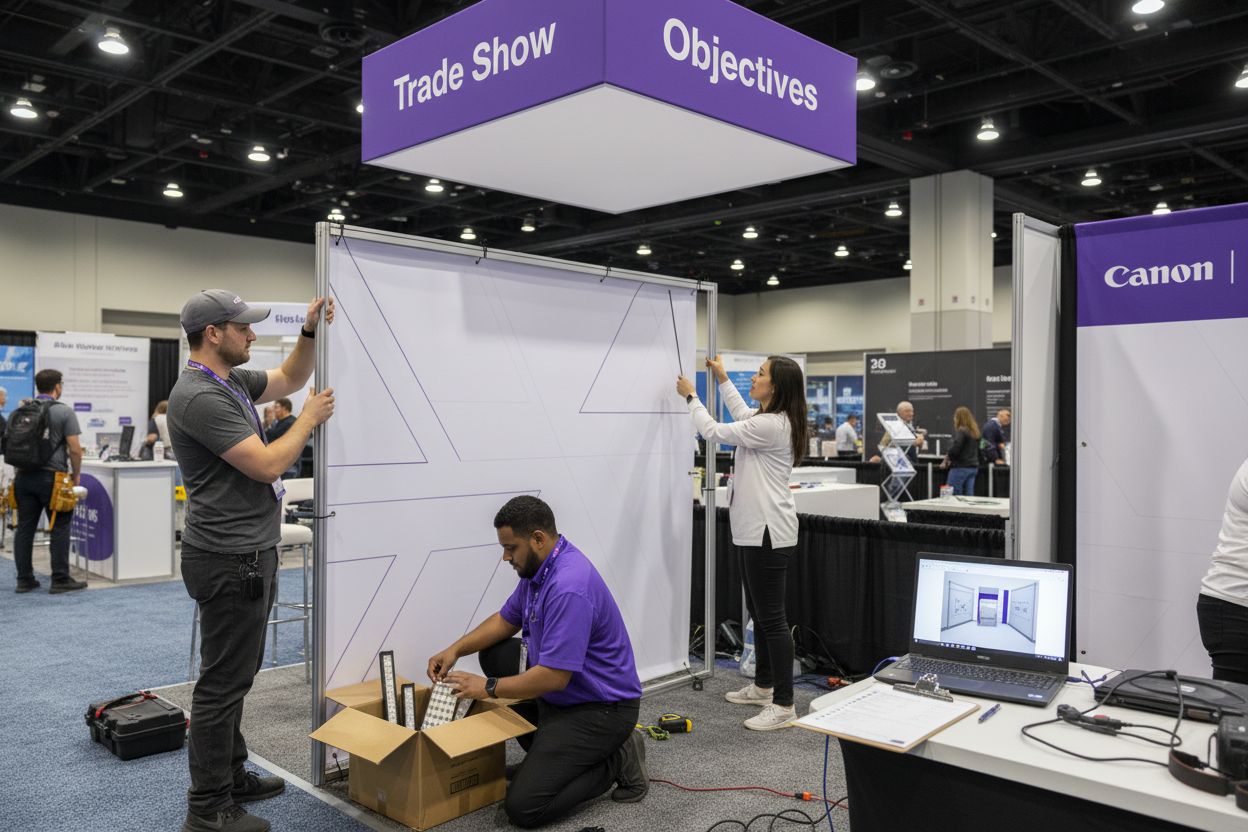
Custom trade show displays can turn a crowded event into your company’s biggest opportunity for new leads and lasting impressions. Most people just pick a booth and hope for the best. But strategic objective setting is the foundation of an impressive trade show presence, and skipping this step means missing out on real results. The most memorable booths do not just look good—they start with a razor-sharp plan that sets the stage for serious business wins.
Table of Contents
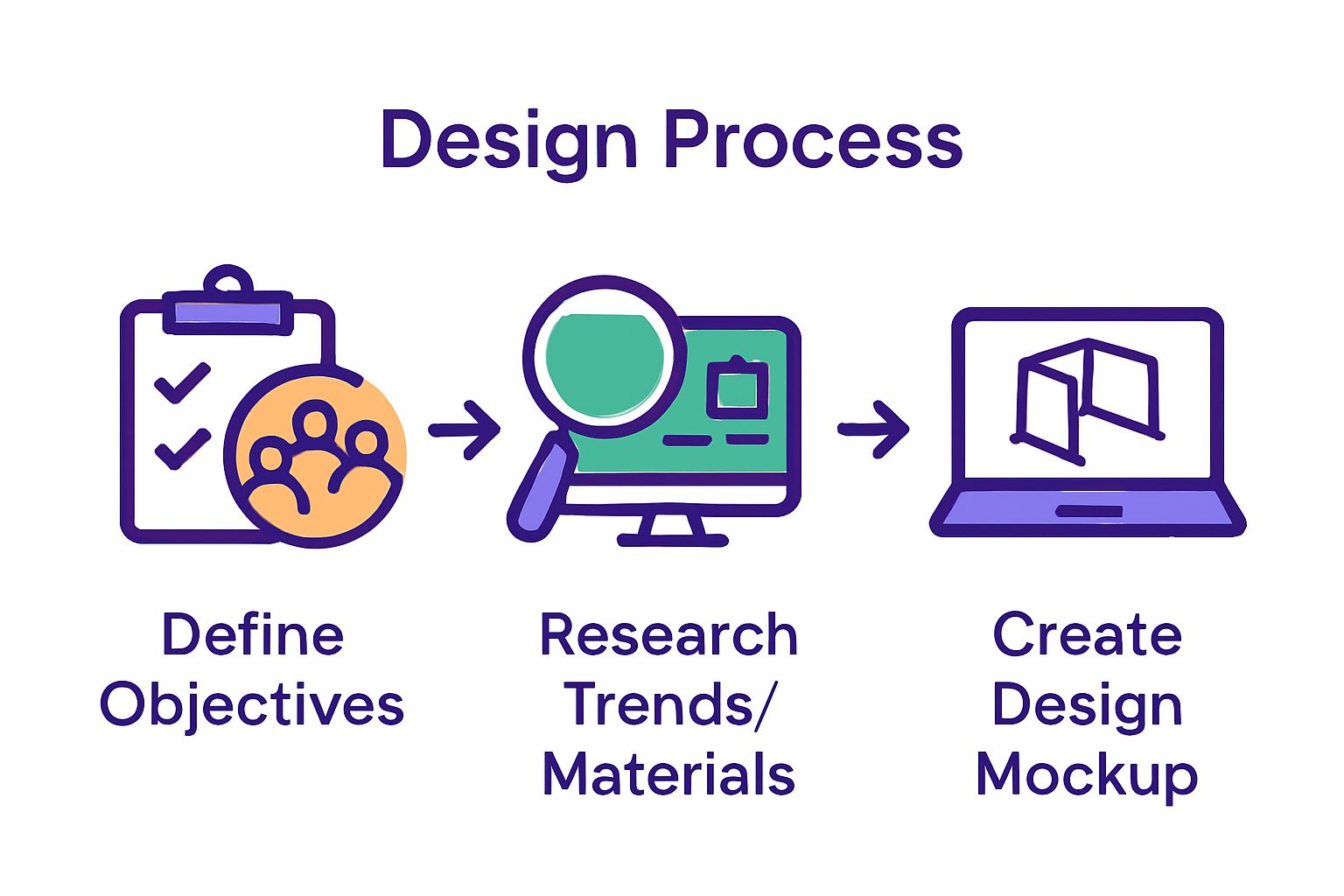
- Step 1: Define Your Trade Show Objectives
- Step 2: Research Design Trends And Materials
- Step 3: Create A Design Mockup For Approval
- Step 4: Fabricate And Assemble Your Display
- Step 5: Set Up Your Display At The Venue
- Step 6: Evaluate And Gather Feedback Post-Event
Quick Summary
| Key Point | Explanation |
|---|---|
| 1. Define Clear Trade Show Objectives | Establish specific, measurable goals for your trade show to drive focus and effectiveness in your display design. |
| 2. Research Design Trends and Materials | Stay updated on industry trends to select impactful designs and materials that resonate with your brand and objectives. |
| 3. Create Design Mockups for Approval | Develop visual mockups to facilitate stakeholder feedback and ensure alignment with brand identity and project goals. |
| 4. Prepare for Fabrication and Assembly | Select a reliable fabrication partner and ensure all materials and designs meet practical exhibition requirements. |
| 5. Conduct Post-Event Evaluation | Analyze feedback and metrics after the event to identify strengths and areas for improvement for future trade shows. |
Step 1: Define Your Trade Show Objectives
Successful custom trade show displays begin with crystal clear objectives that transform your exhibition from a passive booth to an active business opportunity. Before designing a single graphic or selecting display materials, you must precisely understand what you want to achieve at the event. Strategic objective setting is the foundation of an impressive trade show presence.
Your trade show objectives typically fall into several core categories that directly impact your display design and overall strategy. Lead generation stands as a primary goal for many businesses, which means creating a custom trade show display that attracts potential clients and encourages meaningful interactions. Marketing and brand awareness represent another critical objective, where your display becomes a powerful visual storytelling platform that communicates your company’s unique value proposition.
To effectively define your objectives, conduct a comprehensive internal assessment with your marketing and sales teams. Discuss specific metrics you want to accomplish, such as the number of qualified leads, potential partnership opportunities, or brand visibility targets. For instance, a technology company might aim to generate 50 high quality leads, while a design firm could prioritize showcasing portfolio pieces and attracting potential collaborative partners.
read more about creating compelling trade show strategies to complement your display design process. Your objectives should be specific, measurable, and aligned with broader business goals. Quantifiable targets help you design a custom trade show display that not only looks impressive but strategically supports your business outcomes.
Consider creating a simple worksheet that outlines your objectives with clear parameters:
- Specific lead generation targets
- Desired brand awareness metrics
- Networking connection goals
- Potential revenue opportunities
By meticulously defining your trade show objectives upfront, you transform your custom display from a mere visual backdrop into a strategic business tool that actively drives your marketing and sales initiatives.
Step 2: Research Design Trends and Materials
After defining your trade show objectives, diving into current design trends and material options becomes crucial for creating custom trade show displays that truly capture attention. Research is the strategic bridge between your business goals and visual execution, allowing you to craft an experience that resonates with your target audience.
Modern trade show displays are moving beyond traditional static presentations toward dynamic, interactive experiences that engage potential clients instantly. Emerging trends emphasize sustainability, technology integration, and modular design flexibility. Professional designers recommend exploring materials that not only look impressive but also align with your brand identity and event objectives. Lightweight aluminum frames, recyclable fabric graphics, and interactive digital components are gaining significant traction in the exhibition design landscape.
To conduct comprehensive research, leverage multiple resources including industry publications, design portfolios of successful exhibitors, and professional trade show design websites. Attend local design conferences or virtual exhibitions to observe cutting edge display techniques. Social media platforms like Pinterest and Instagram can provide visual inspiration, while professional networks such as LinkedIn offer insights into emerging industry design trends. Collect visual references and take detailed notes about design elements that spark your imagination.
discover innovative display design strategies that can elevate your trade show presence. Consider the practical aspects of your display materials beyond aesthetic appeal. Factors like transportation weight, assembly complexity, durability, and potential reusability should guide your material selection process.
Key research focus areas include:
- Current industry design aesthetic trends
- Material durability and portability
- Technology integration possibilities
- Sustainability and environmental considerations
Successful research culminates in a curated mood board or digital portfolio showcasing potential design directions. This visual compilation will serve as a critical reference point when transitioning to the next stage of your custom trade show display development.
Step 3: Create a Design Mockup for Approval
Transforming your research and objectives into a tangible visual representation requires careful planning and strategic design execution. A design mockup serves as the critical bridge between conceptual ideas and final custom trade show display production, offering stakeholders a comprehensive preview of the proposed exhibition experience.
Begin by selecting professional design software that allows comprehensive visualization. Adobe Illustrator, SketchUp, and specialized trade show design tools provide robust platforms for creating detailed mockups. Professional designers recommend developing multiple design variations that showcase different perspectives and configurations. Your mockup should incorporate precise measurements, color schemes, graphic placements, and interactive elements that align with your previously established trade show objectives.
explore professional design techniques to refine your presentation approach. When crafting your mockup, prioritize visual clarity and brand consistency. Include realistic representations of graphics, textures, and structural elements that demonstrate how your custom trade show display will look and function in an actual exhibition environment. Consider creating both digital renderings and physical scale models to provide comprehensive visualization options for decision makers.
Collaborate closely with your design team or external design professionals to ensure the mockup captures the nuanced details of your brand identity. Incorporate feedback mechanisms that allow stakeholders to provide input and suggest refinements. This collaborative approach helps identify potential design challenges before significant resources are invested in production.
Key mockup development considerations include:
- Accurate scale representation
- Brand color and graphic fidelity
- Structural feasibility
- Potential interaction zones
- Material texture and finish simulation
Successful mockup approval requires presenting a design that not only meets technical specifications but also tells a compelling visual story about your brand’s unique value proposition. The final mockup should inspire confidence and excitement among stakeholders, clearly demonstrating how your custom trade show display will effectively achieve your established objectives.
Step 4: Fabricate and Assemble Your Display
Fabrication transforms your meticulously designed mockup into a physical representation of your brand’s trade show vision. This critical stage demands precision, technical expertise, and attention to every structural and aesthetic detail. Selecting the right fabrication partner becomes paramount to ensuring your custom trade show display meets both your creative expectations and practical exhibition requirements.
Professional fabrication begins with selecting materials that balance durability, portability, and visual appeal. Lightweight aluminum frames, tension fabric graphics, and modular components offer versatility and ease of transportation. Work closely with your fabrication team to verify material compatibility with your original design specifications. Discuss potential challenges such as venue restrictions, shipping limitations, and assembly complexity that might impact your final display construction.
explore trade show display configuration options to understand potential structural variations. During the fabrication process, request periodic progress updates and prototype reviews. This collaborative approach allows real time adjustments and ensures the final product aligns perfectly with your initial design vision.
Professional fabricators will provide technical recommendations that enhance structural integrity without compromising aesthetic quality.
Assembly represents another crucial aspect of display preparation. Develop a comprehensive assembly guide that includes detailed instructions, required tools, and estimated setup time. Practice complete display assembly before the actual trade show to identify potential challenges and streamline the installation process. Consider creating a modular design that facilitates quick setup and breakdown, reducing potential stress during exhibition preparation.
Key fabrication and assembly considerations include:
- Material durability and weight
- Graphic print quality
- Structural stability
- Ease of transportation
- Setup and breakdown complexity
Successful fabrication culminates in a custom trade show display that not only meets technical specifications but also tells a compelling visual narrative about your brand. The final product should inspire confidence, attract potential clients, and effectively communicate your business objectives within the exhibition environment.
Step 5: Set Up Your Display at the Venue
Arriving at the trade show venue marks the culmination of your strategic planning and design efforts. Setting up your custom trade show display requires meticulous preparation, precision, and a strategic approach to maximize your exhibition impact. The physical installation is more than just assembling components it is an opportunity to transform your carefully crafted design into an engaging brand experience.
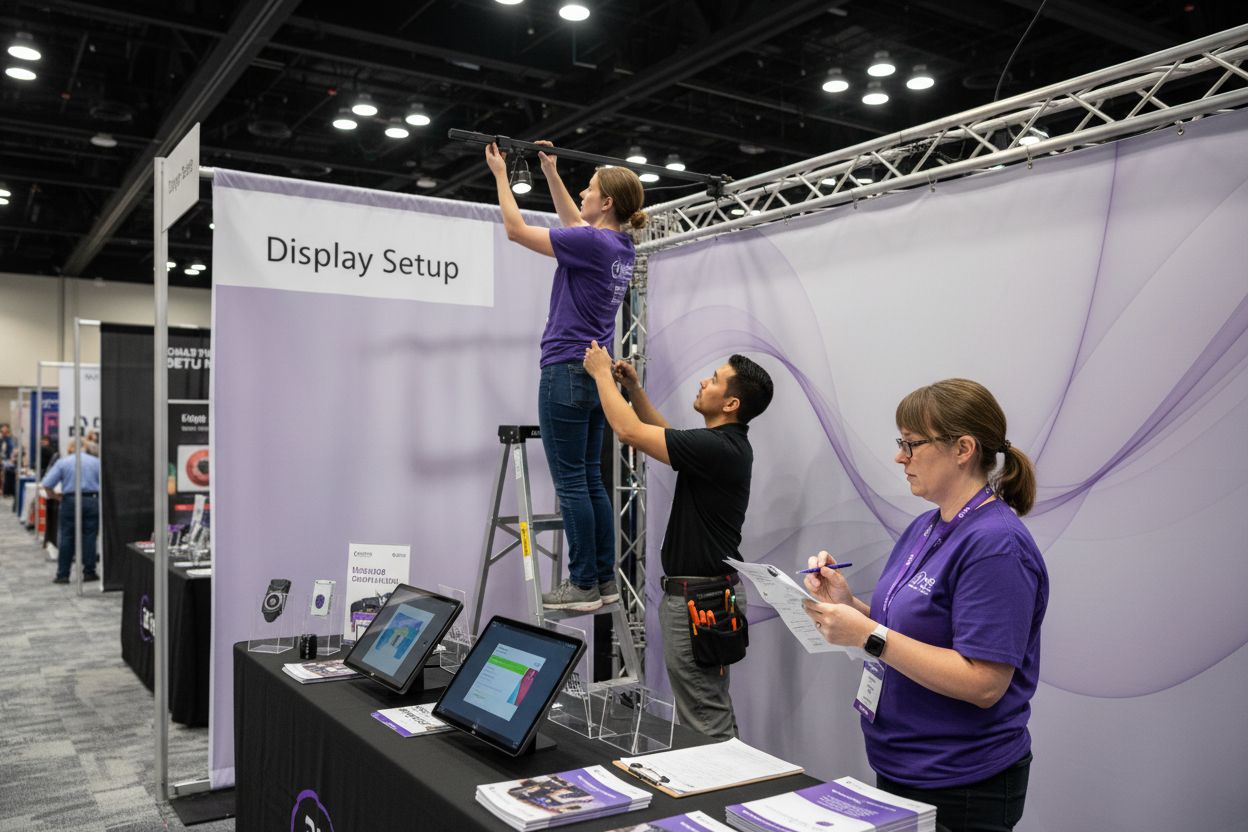
Begin by thoroughly reviewing the venue layout and your designated space before unpacking any display materials. Arrive early to allow ample time for setup, accounting for potential unexpected challenges like uneven flooring, electrical outlet locations, or spatial constraints. Bring a comprehensive toolkit including backup hardware, extra graphic panels, cleaning supplies, and essential installation equipment. Professional exhibitors recommend creating a detailed setup checklist that outlines every step of the display assembly process, ensuring nothing is overlooked during the high pressure exhibition environment.
discover strategies for maximizing booth attraction to complement your display setup. Carefully unpack and inspect each display component, checking for any potential damage during transportation. Follow your previously developed assembly guide precisely, paying close attention to structural alignment, graphic placement, and interactive element positioning. Lighting and positioning are crucial elements that can dramatically enhance your display’s visual appeal and visitor engagement.
Ensure your display not only looks impressive but also functions seamlessly. Test all interactive technologies, verify graphic clarity, and confirm that marketing materials are strategically positioned for maximum visibility. Create an inviting entrance that naturally guides potential clients into your exhibition space, using your display design to tell a compelling brand narrative.
Below is a checklist table to help you verify that your trade show display setup covers all essential aspects for a successful presentation and visitor engagement at the venue.
| Setup Verification Point | What to Check/Do |
|---|---|
| Structural stability and alignment | Ensure all components are securely assembled and stable |
| Graphic clarity and positioning | Confirm graphics are clear, undamaged, and positioned as planned |
| Technology and interactive element functionality | Test electronics and interactive features to ensure proper operation |
| Accessibility and visitor flow | Check that entrance and pathways are open and welcoming |
| Overall visual brand representation | Review the space to ensure consistent branding and visual appeal |
Key setup verification points include:
- Structural stability and alignment
- Graphic clarity and positioning
- Technology and interactive element functionality
- Accessibility and visitor flow
- Overall visual brand representation
A successful venue setup transforms your custom trade show display from a static structure into a dynamic platform for business connections, effectively communicating your brand story and creating memorable interactions with potential clients.
Step 6: Evaluate and Gather Feedback Post-Event
The conclusion of your trade show represents not an endpoint, but a critical opportunity for strategic reflection and improvement. Comprehensive post event evaluation transforms your exhibition experience into a powerful learning opportunity, enabling continuous refinement of your custom trade show display strategy for future events.
Immediately following the exhibition, schedule a comprehensive debrief with your team to capture fresh insights while memories remain vivid. Document quantitative metrics such as total visitor interactions, lead generation numbers, and collected contact information. Simultaneously, gather qualitative feedback by conducting structured interviews with team members who staffed the display, capturing their observations about visitor engagement, display effectiveness, and potential design improvements.
explore advanced marketing performance analysis techniques to enhance your evaluation process. Develop a systematic feedback collection approach that includes multiple perspectives. Reach out to potential clients who visited your booth, sending personalized follow up communications that request specific insights about their display experience. Professional exhibitors understand that candid external feedback provides invaluable perspectives that internal teams might overlook.
Create a comprehensive assessment document that critically examines every aspect of your custom trade show display. Analyze design elements, structural functionality, graphic impact, and interactive features. Compare actual performance against your originally established objectives, identifying areas of success and potential future optimization. Consider factors like visual appeal, ease of navigation, technological integration, and overall brand representation.
Key post event evaluation focus areas include:
- Quantitative lead generation metrics
- Visitor interaction quality
- Display design effectiveness
- Team performance and engagement
- Alignment with original exhibition objectives
Successful post event evaluation transforms your trade show experience into a strategic learning opportunity. By meticulously analyzing performance, gathering diverse feedback, and maintaining a growth mindset, you position your future custom trade show displays for continuous improvement and increasingly impactful client interactions.
This table summarizes key areas to focus on when evaluating your custom trade show display after the event, helping you systematically analyze its effectiveness and identify opportunities for improvement.
| Evaluation Focus Area | What to Analyze |
|---|---|
| Lead generation metrics | Total number and quality of leads acquired |
| Visitor interaction quality | Depth and quality of conversations at your display |
| Display design effectiveness | Visual appeal, clarity of message, and engagement level |
| Team performance | Staff preparedness, engagement, and execution |
| Alignment with objectives | How well actual outcomes matched initial event goals |
Transform Your Trade Show Display Into a Real Business Asset
You have worked hard to define clear objectives, research trends, and design an eye-catching custom trade show display. But the real challenge lies in turning those big ideas into tangible results that wow your clients and bring real value to your business. Worrying about printing quality, installation, or managing multiple vendors can hold you back from making the most of your investment.
Let Titans of Print eliminate the stress and complexity. As Miami’s top printing partner, we help you bridge vision and reality by printing every element of your display from stunning booth graphics and banners to branded apparel and promotional products. You stay focused on meeting your trade show goals while we handle production, permitting, and installation. Visit Titans of Print to explore how our all-in-one trade show solutions can give you a seamless, polished, and client-ready presence. Ready to impress at your next event? Get started now with Titans of Print and turn your trade show ambitions into business results.
Frequently Asked Questions
How can I define clear objectives for my custom trade show display?
To define clear objectives, conduct an internal assessment with your marketing and sales teams. Focus on specific metrics like the number of qualified leads or brand awareness targets you want to achieve during the event.
What are the key design trends to consider for trade show displays?
Current design trends include sustainability, technology integration, and modular design. Research these trends by exploring design portfolios or attending industry conferences to gather inspiration and practical applications for your display.
How can I create a design mockup that impresses stakeholders?
To create an impressive design mockup, use professional design software to develop detailed visualizations of your display. Include precise measurements, color schemes, and interactive elements that align with your established objectives, and consider incorporating feedback from relevant stakeholders.
What should I focus on during the fabrication of my trade show display?
During fabrication, prioritize material durability, weight, and visual appeal to ensure the final product meets your design expectations. Communicate closely with your fabrication team to address any challenges and ensure that materials comply with your original specifications.
How can I effectively set up my trade show display at the venue?
To effectively set up your display, arrive early and review the venue layout thoroughly. Follow a detailed setup checklist, ensuring structural alignment and optimal graphic positioning, to create an inviting and functional exhibition space that draws visitor engagement.
What steps should I take to evaluate the success of my trade show display?
After the event, conduct a debrief with your team to document visitor interactions and gather qualitative feedback. Analyze this data against your initial objectives to identify areas for improvement and refine your trade show strategy for future events.
Recommended
- How Can I Attract Visitors To My Trade Show Booth?
- How To Draw People To Your Tradeshow Booth And Keep Them There?
- Trade Show Booth Vs Table-top Display: Which Do I Need?
- Are Trade Show Displays Reusable For Multiple Events?
- Boost Your Marketing Photo Booth Business in 2025 • MAX Design – DJ Gear & Photo Booth Gear


